Two members of the White House UAP Science Advisory Council have now done what the public dumps invited: they watched every sensor video the Department of War has posted under PURSUE this year, and they tried to turn the motion on screen into a real speed.
They could not.
Jacob Haqq-Misra of Blue Marble Space and Ravi Kopparapu of NASA’s Goddard Space Flight Center reviewed 112 targeting-pod and turret-camera clips – infrared and electro-optical – released since May on war.gov/UFO. Their preprint, Limits on Velocity Recovery from the PURSUE Sensor Videos (arXiv:2608.12445, August 12; not yet peer-reviewed), is the first published kinematic pass through the whole set. The Debrief reported the paper on August 20.
The finding is blunt. You can count how many pixels an object crosses per frame. Converting that to meters per second also needs range to the object, the speed of the observing aircraft, the aspect angle, and the camera’s field of view. No clip in the corpus gives that full set. Most of the useful on-screen numbers are behind black boxes.
“With such limited data, I would urge people to avoid both extraordinary conclusions and outright dismissal.” – Ravi Kopparapu to The Debrief, August 20, 2026
Kopparapu said those views are his own analysis, not NASA’s.
What the 112 Clips Actually Give You
The authors sorted the dump into clips where an object crosses the frame (“transit”) and clips where the pod tracks it and holds it near center. Tracking is a trap for the eye: the camera slews to keep the target in the middle, so the object looks almost still even if it is moving fast through the air. Apparent motion on a tracked clip is a property of the sensor, not a speed.
Frame rate and frame size are in every file. Observer velocity and range rate are in none of them. Haqq-Misra told The Debrief that friends and other scientists often assume more data came out than actually did.
“Most of the useful quantities are redacted. It is also not immediately obvious that what appears to be a fast-moving object in an infrared sensor video might be a mundane object (like a bird) much closer to the camera.” – Jacob Haqq-Misra to The Debrief
That is not an identification. It is the missing-range problem written in one sentence.
PR113: Bird at Close Range, or Mach 5 a Kilometer Out
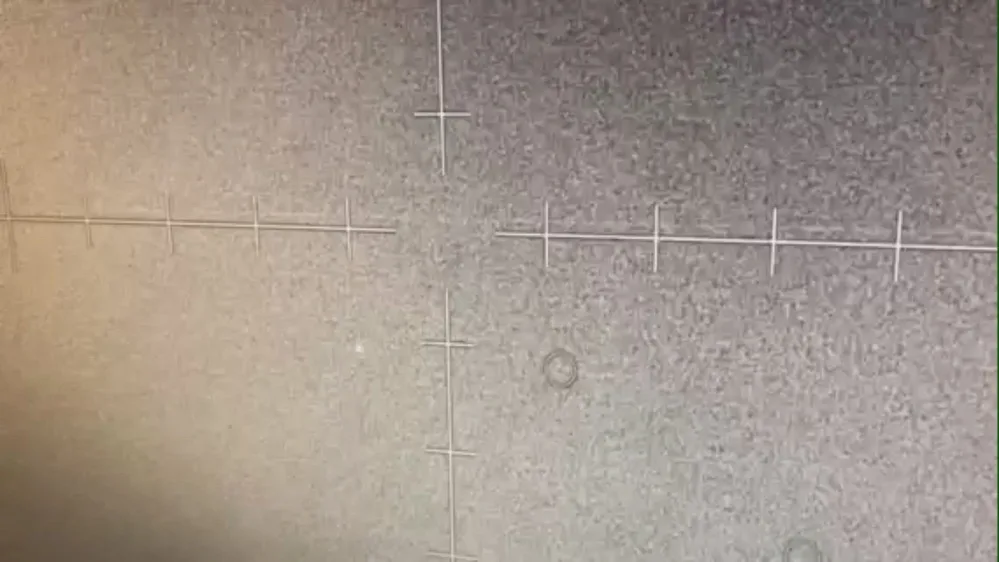
One 1996 infrared clip from the western United States – cataloged DOW-UAP-PR113 – is the closest they got. A compact dark body crosses the frame at 142 pixels per frame, about 2.2 frame-widths per second, and is directly visible for only ~0.1 seconds. Depression-angle ticks burned into the image let them reconstruct a field of view of roughly 54 degrees.
Even then, range is unknown. At that angular rate, the same streak is consistent with a bird passing the sensor up close or a craft on the order of 37 meters across at 3 kilometers, moving at supersonic speed relative to the jet. The paper’s own abstract uses that pair as the bound: the clip “does not provide sufficient information to distinguish between a bird flying past the sensor at close range and a large craft traveling at Mach 5 a kilometer away.”
PR149: An Upper Bound – Subsonic, Still Unidentified
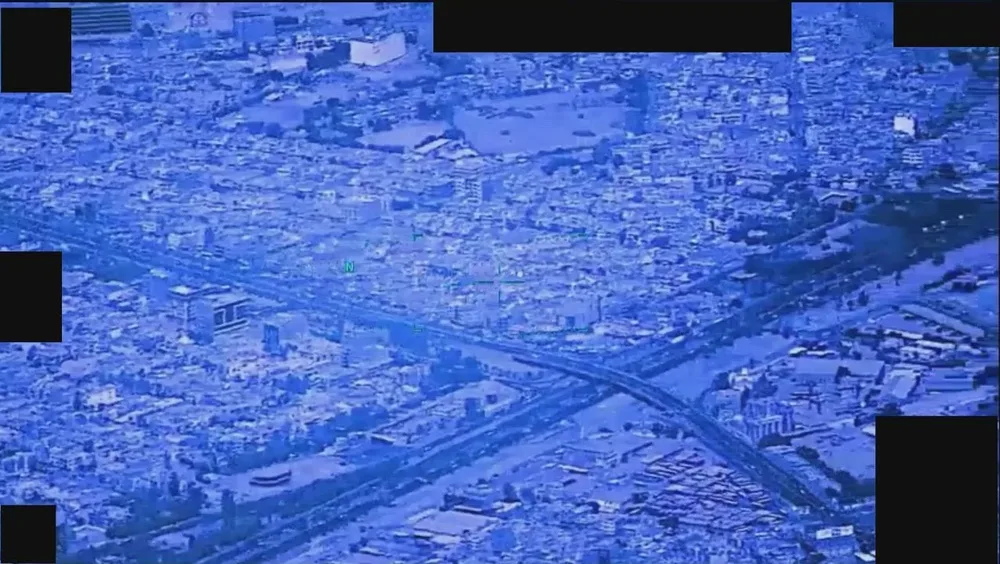
A 2023 Middle East clip, DOW-UAP-PR149, includes a carrier in the same frame as a compact object crossing for 3.2 seconds. Using the ship’s hull as a scale bar, the authors put an upper bound of about Mach 0.4 on the object’s speed relative to the observer – and only if the object is at the same range as the ship. If it is higher, it is slower still. Supersonic relative motion can be excluded for that one file. Identity cannot.
That is the best constraint in 112 videos: one object that is not breaking Mach 1 relative to the camera, and still not named.
GOFAST Showed What Extra Data Does
The paper’s comparison case is not a PURSUE file. It is the Navy’s 2015 GOFAST ATFLIR clip, formally released by the Pentagon in 2020 with the Nimitz FLIR1 and GIMBAL videos. Enough extra information existed there for later analysis – including NASA’s 2023 UAP study – to treat much of the apparent skimming speed as parallax from the jet. Haqq-Misra and Kopparapu note that GOFAST is the example of a clip where the extra numbers were available. The PURSUE set, they write, is thinner than that.
The 2020 release statement said the authorized videos “do not reveal any sensitive capabilities or systems.” The authors treat that as proof that, in at least some cases, more than a redacted movie can be made public without handing over the targeting pod’s classified internals.
What They Want Next
Kopparapu told The Debrief the single most useful missing number is range over time. Field of view, the jet’s trajectory, and viewing geometry would come next. Haqq-Misra said even an official document stating the distance – without putting the classified HUD back on the video – would help. Flight logs, if they still exist, would help more.
The council, which Loeb chairs, has already sent sensor recommendations toward a multi-site, multi-mode observatory. The paper’s last line is not a verdict on the objects. It is a request for the data that would let anyone, inside or outside government, stop guessing from pixels.
“Careful scientific investigation, accompanied by access to the underlying data, is the only reliable way to make progress on these cases.” – Ravi Kopparapu to The Debrief
PURSUE Release 05 and the earlier tranches remain the public corpus. This paper is the first outside measurement of what that corpus can and cannot support.
Sources: arXiv:2608.12445 · The Debrief · PURSUE portal · DoD Navy video release (2020)