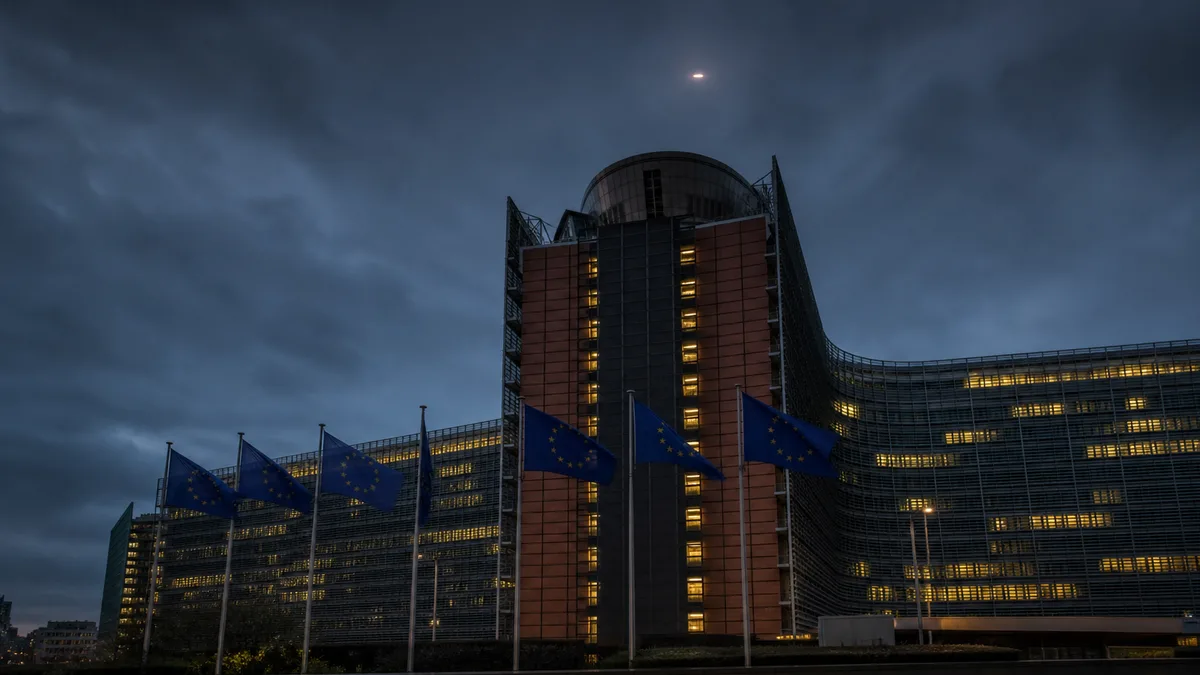
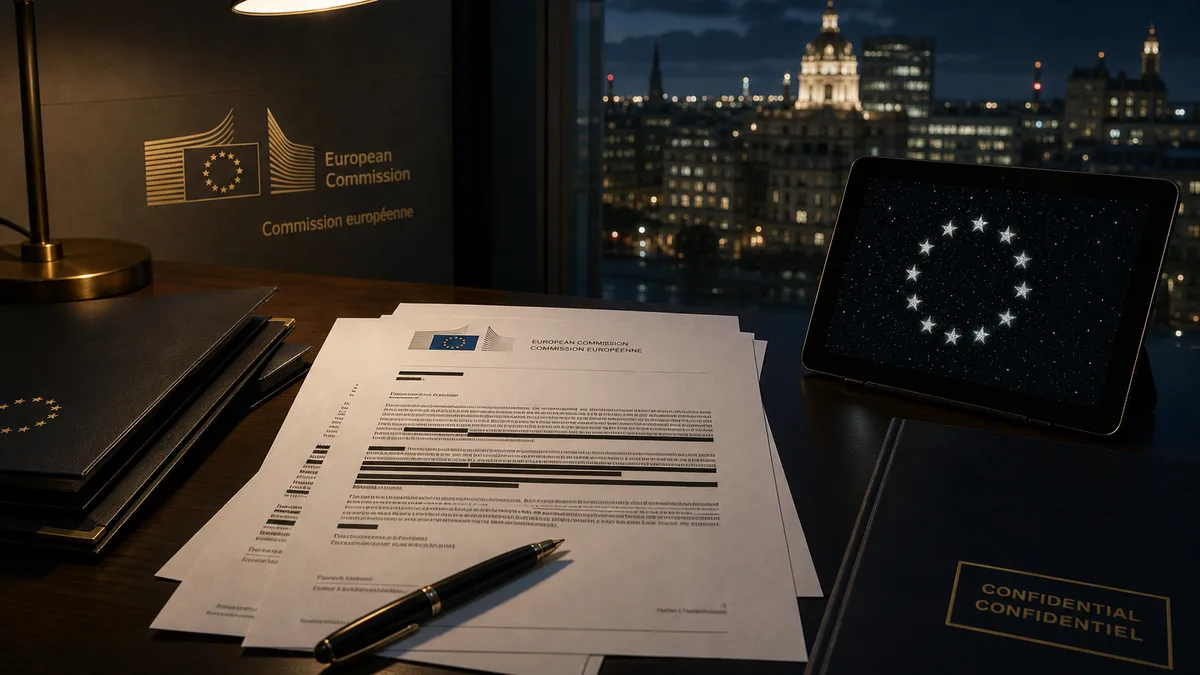
Euronews obtained a European Commission defence-department document showing Brussels has been engaged with unidentified anomalous phenomena since at least 2023 – quieter than the United States, but not absent.
The public line has not changed. A Commission spokesperson told the outlet that “UAP are the responsibility of EU member states, which handle them according to national security and defence priorities.” The internal paper trail says something more specific: officials think they are getting better at seeing these objects, want still-better sensors, and have already used a UAP appeal as a reason to push member states on space-object detection.
That is not an EU AARO. It is the first clear documentation that the Commission has been working the file under the radar, as Euronews put it, while aviation regulators insist there is no systemic safety problem to fix.
The 2022 letter that opened the file
Euronews traces the paper to a October 2022 appeal from a Malaysian father-and-son pair of amateur astronomers, internationally known for lunar imaging, who wrote the Commission under the heading “UAP captures in the airspace and deep space using our UV infrared telescope.” They sent 37 sky and space images, including alleged UAP, and asked Commission President Ursula von der Leyen what the objects were.
They wrote that governments “simply have no opinions” when confronted, and that the objects appeared “very near to aircraft and important targets, such as military and nuclear facilities.” They also claimed detections on local Wi-Fi frequencies.
Because the sightings were over Malaysia, the Commission said it had no authority to investigate. It did say it would propose that the 27 member states “increase its ability to detect objects in the space environment around the Earth.”
“This is partly to help us better identify the UAPs that you have seen and the many pieces of space debris that endanger the many uses of space.”
A separate letter quoted by Euronews is the line Ross Coulthart and Christopher Sharp amplified on August 17: “We are getting better at seeing it (UAPs) and better identifying it as our technological capacities improve, but we need to get even better.”
The same amateur astronomers approached NASA, Malaysia’s nuclear and science ministries, and Canada’s defence ministry. Euronews says those bodies declined to engage. Former Canadian MP Larry Maguire, contacted separately, encouraged them in a June 2022 email: the skies “aren’t classified,” and more public recordings would mean more awareness.
What Brussels will and will not do
Euronews asked whether the Commission is considering a U.S.–EU information-sharing channel on UAP, or whether it would monitor the issue itself for flight safety. The spokesperson answer stayed on member-state competence.
That sits awkwardly next to the bloc’s wider push for joint defence industrial capacity. The same executive that wants Europe “defence-ready” by the end of the decade still treats unidentified objects in European airspace as a national file – except when it is talking about space situational awareness and debris, where it does claim a role under the EU Space Regulation.
France remains the only EU country with a dedicated, state-funded investigation office: GEIPAN (CNES), operating since 1977. Euronews cites more than 3,300 analysed cases, 106 left unexplained after full study, and 1,014 unresolved for lack of data. On 29 June, the French Parliament held a UAP discussion covering GEIPAN, the French Air and Space Force, and possible liaison with the United States. MP Arnaud Saint-Martin told Le Parisien the point was to “move beyond sensationalism and fantasies” and treat a subject of “significant interest” seriously.
Japan is already moving toward a cabinet-level crisis office. The United States has AARO, PURSUE file dumps, and a UAP Science Advisory Council. Europe’s executive is documenting interest without creating an office.
Pilots want a reporting box. EASA says they already have one.
German MEP Fabio De Masi (non-attached) has repeatedly asked the Commission, in 2025 and 2026, to add a dedicated, standardised UAP category to EU aviation reporting so incidents are not misfiled. Dutch commercial pilot Rob Akkermans told Euronews that after a 2023 Middle East–Netherlands sector, six crew members watched lights flare, fade, and appear to “dogfight” for more than two hours, still on the same heading after they reached the Balkans, then vanish at high speed. The professional problem, he said, was stigma: crews worry more about “the professional consequences of the taboo” than the safety risk.
Boeing 747 captain Christiaan van Heijst described older encounters, including a 2010 Amsterdam–Málaga flight at 41,000 feet where Madrid civilian ATC had no traffic and handed the crew to military ATC – which also had nothing on the scope. The object stayed in view for at least an hour. His point was not origin. If something is in the airspace and cannot be identified, “first and foremost it is a safety issue and not science fiction.”
Joachim Dekkers of the UAP Coalition Netherlands told Euronews that stigma means about 90% of pilot sightings go unreported, and that without a dedicated category crews are “forced to misclassify critical data.”
EASA disagrees that a new box is required. It told Euronews that existing occurrence reporting already covers “any occurrence that may have an impact on aviation safety,” including UAP, and that “at present, EASA has not identified evidence indicating that reports of UAP represent a systemic aviation safety issue requiring additional measures.” Advocates reply that the missing evidence may be the reporting gap itself. The Dutch Safety Board has started taking crew UAP reports under a general category; Germany’s Federal Aviation Office has engaged scientific work. Those national fragments do not add up to an EU picture.
De Masi put the contradiction in security terms: neither the Commission nor the Council claims specific evidence on the origin of airspace incursions, which he called “quite astonishing given surveillance of airspace and critical infrastructure.” Either the airspace is vulnerable, he said, or official silence is misleading. “This is not about green little men but the safety of our airspace.”
Why it matters now
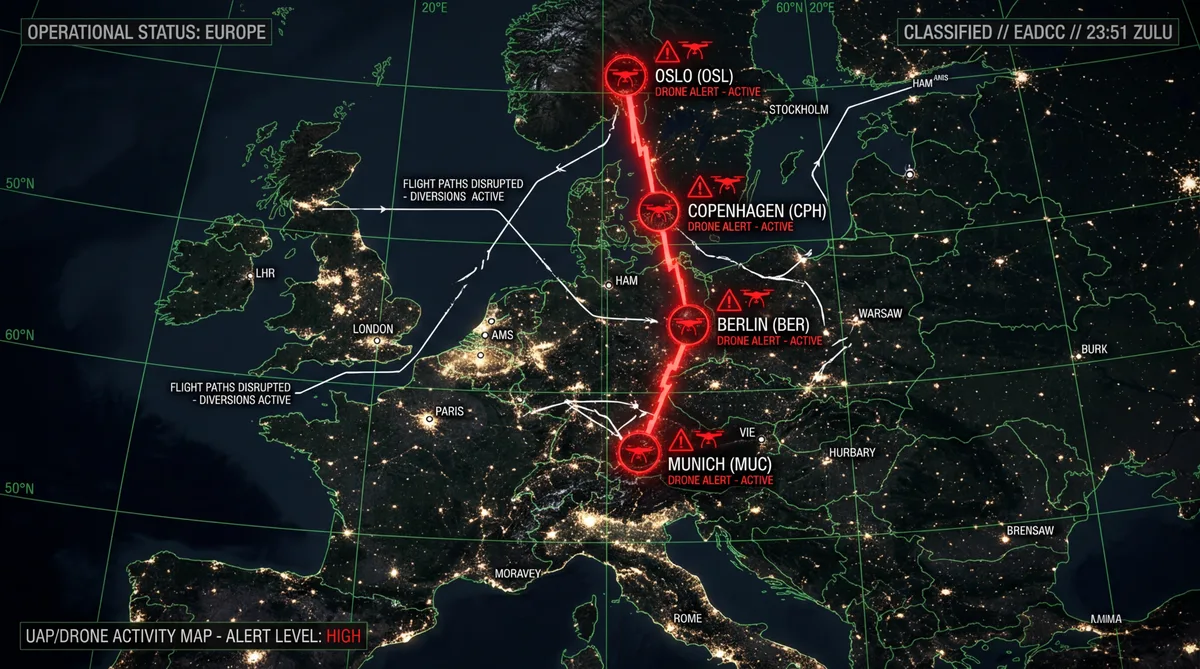
European airports have already halted operations over unidentified objects and drones. The Commission document does not identify those events as UAP, and Euronews is careful that some objects may be adversary drones. What the exclusive does establish is narrower and still new: Brussels has been reading UAP correspondence since 2022, writing about detection capability in 2023, and telling the public in 2026 that the phenomenon is not an EU job – while asking member states to see the sky more clearly.
Sources: Euronews exclusive · Ross Coulthart · Japan UAP office proposal