
Update (August 15): In a Ralph Bunche Institute conversation, Elizondo said shooting down a UAP “would be a mistake and a provocation” and that Project Interloper was a real operational plan under development. Clip → · This week’s roundup →
On February 25, 2026, Glenn Beck sat down with Luis “Lue” Elizondo – the former head of the Pentagon’s Advanced Aerospace Threat Identification Program (AATIP) – for a wide-ranging conversation about where UAP disclosure stands and why it matters now.

The interview, published under the headline “Demons, Secret Tech, or Aliens? Expert Breaks Down the Most Popular Theories About UAPs,” covered national security, rumored timelines, contractor liability, and a Vatican scroll describing objects in the sky that date back to ancient Rome.
Elizondo opened with a warning he’s delivered before – and says he means literally.
“In the world of national security, the clock is always ticking.”
Strategic Surprise
Elizondo’s central argument is straightforward: China and Russia both have active UAP research programs. The United States cannot afford to be caught off guard.
“What you don’t want to do is allow ourselves to get to a point of what we call strategic surprise. All of a sudden, you have country X or country Y out there that may not necessarily be friendly to the US and all of a sudden they find they have a breakthrough.”
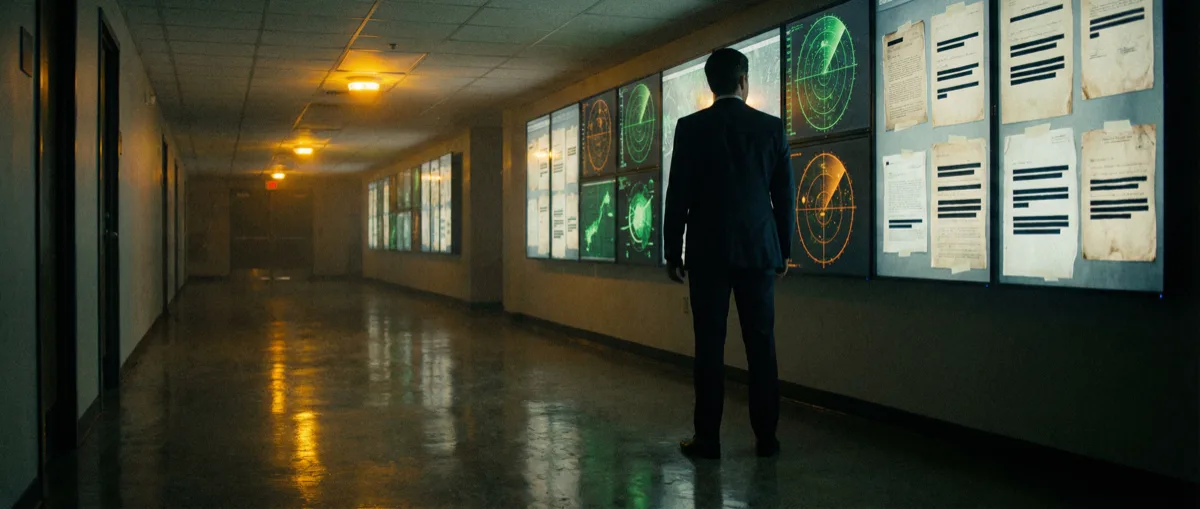
He pointed to the 2024 New Jersey drone incursions as an example of the government fumbling its own messaging – first denying anything unusual, then admitting it couldn’t explain what was happening. The Chinese spy balloon incident was another case where officials avoided uncomfortable truths until they couldn’t.
The 80-Year Problem
Beck asked whether the observed UAP could be adversary technology. Elizondo’s answer was blunt: the timeline doesn’t support it.
“We’ve been dealing with this now for decades. And when I say decades, at least eight decades. That’s 80 years.”
He laid out the logic: 80 years ago, the U.S. had just entered the atomic age. No country had broken the sound barrier. No one had been to space. If a foreign power had secretly perfected the capabilities observed in UAP encounters back then – and deployed them over U.S. military facilities for eight decades undetected – it would constitute “the worst intelligence failure in the history of our nation, eclipsing that of even 9/11.”
“It simply doesn’t make sense that all of this what we’re seeing is Russian or Chinese. It doesn’t pass the smell test.”
2027 and 2036 – the Rumored Timelines
Beck pressed Elizondo on a date that keeps surfacing in UAP circles: 2027. Multiple sources across the disclosure community have referenced it. Elizondo confirmed he’s heard it too – and another date.
“I’ve heard 2027. I also heard 2036. The capacity in which I heard it I’d rather not get into. I heard it when I was working with US Space Force. But to me it seemed more anecdotal.”
He stopped short of endorsing the dates but acknowledged they warrant attention. The nature of what 2027 or 2036 might represent – whether a disclosure deadline, an anticipated event, or something else – remains undefined in public discussion.
Beck also noted that Laura Trump recently said there is a prepared presidential speech on the topic, and Elizondo said he believes it was written specifically for this moment – not a generic holdover from prior administrations.
Some researchers have connected the persistent timeline speculation to broader questions about what may be approaching. Israel Anderson has argued that the decades-long search for a large undiscovered object in the outer solar system – variously called Planet 9, Planet X, or Nibiru – may be closer to resolution than mainstream science acknowledges.
“We simply can’t preclude out of hand the existence of Nibiru and its imminent arrival. It’s clear to me they built the JWST to find it.” – Israel Anderson
Whether or not such an object is related to the UAP phenomenon, the convergence of rumored timelines, accelerating disclosure efforts, and unprecedented government transparency initiatives has created a moment unlike any in the modern history of this subject.
Trillions in Liability
One of the interview’s most concrete claims concerned money. Beck’s researcher had flagged a theory: if the government funneled exotic recovered technology to specific defense contractors, the companies that didn’t receive it would have grounds for massive lawsuits.
Elizondo confirmed the concern is real.
“If it turns out that maybe some general somewhere in the halls of the Pentagon gave a company an unfair advantage, you can imagine in 10 years, 20 years, company A becomes a multi-billion dollar aerospace company where company B goes bankrupt.”
He described potential SEC violations, lost investor value, and damages he estimated could reach “not just billions but trillions of dollars.” This legal exposure, he said, is a genuine barrier to disclosure – not just embarrassment or national security, but corporate liability on a scale that could reshape the defense industry.
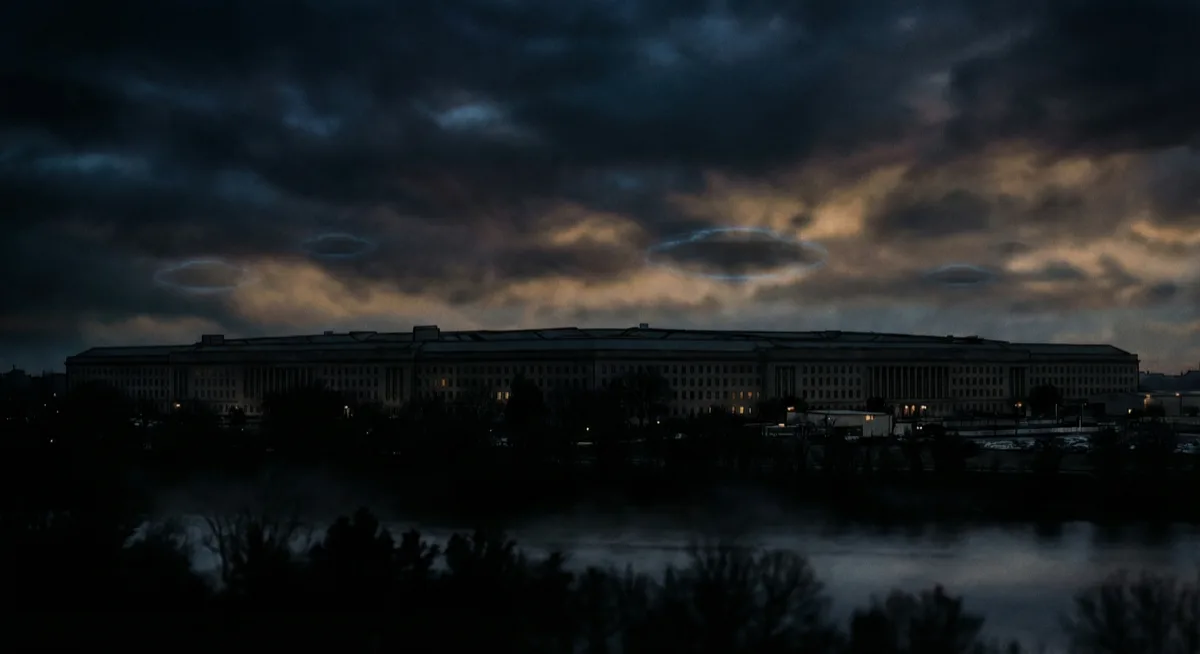
“They’re Demons”
Beck asked Elizondo to revisit something he’d mentioned on a previous appearance: a spiritual or religious dimension inside the Pentagon’s UAP programs.
Elizondo was direct.
“There were elements in the Pentagon that believe that what we were looking into were actually demons. And there were some fundamentalists that believed that this was all the work of, so to speak, the devil.”
He recounted a specific conversation with a senior U.S. government official:
“What was told to me point blank was, ‘Lou, have you read your Bible lately?’ And I said, ‘Well, I thought I was pretty familiar with it. Why?’ And he said, ‘Well, then you would know because what we’re dealing with are demons and we shouldn’t be looking into them.’”
Elizondo said he respects the perspective even though he doesn’t share it. He noted that multiple senior officials – some of them friends – held this view and actively discouraged investigation into UAP on religious grounds.
The implications are significant. If officials with authority over UAP programs believed the phenomenon was demonic, it could explain decades of institutional resistance to serious study – not as a cover-up of evidence, but as a deliberate choice not to look.
The Vatican Scroll
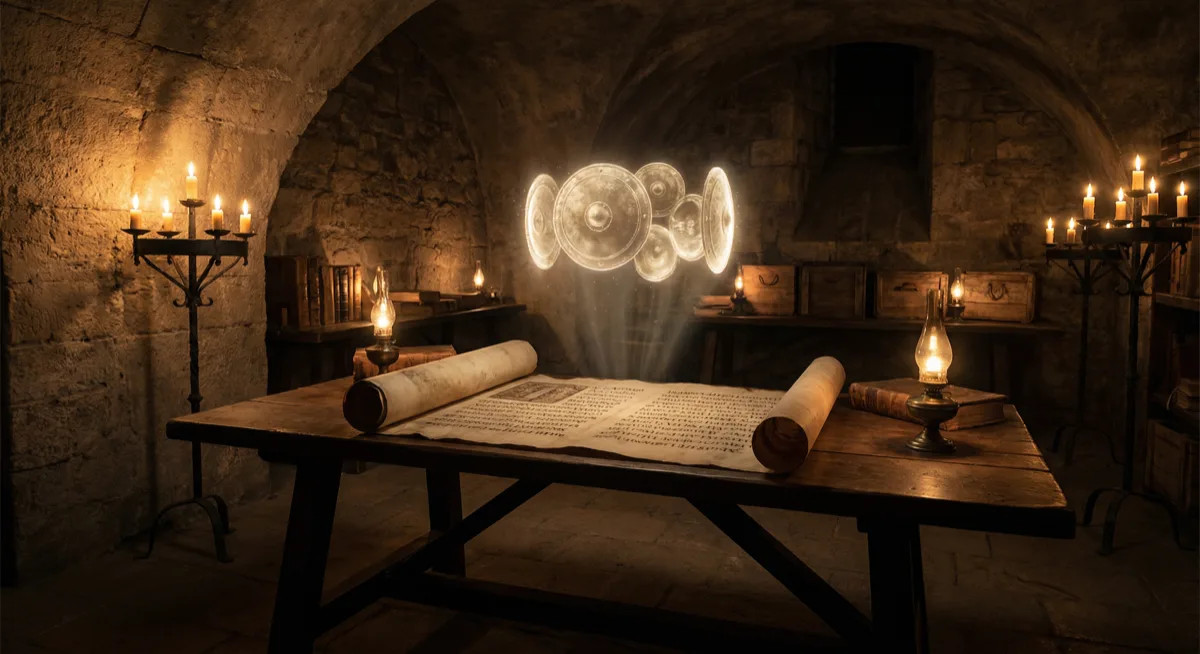
Elizondo then shared an anecdote from a visit to the Vatican. He said senior academics there showed him an old Latin parchment – a document in the Vatican’s own possession – describing what he called “eclipus.”
“Eclipus is a Latin word – think of eclipse – and it was the word they were using for the Roman shield because the Roman shields were round and lenticular and they looked like suns.”
The text, he said, described a conversation between a Roman soldier and a general about “flaming Roman shields in the sky” that followed them from battlefield to battlefield.
Researcher Jason Colavito has noted that the anecdote likely refers to a well-known Latin text, not a secret Vatican document, and that “eclipus” is probably a mishearing of clipeos – the Latin word for round shields. Ancient Roman accounts of shield-shaped objects in the sky do exist in the historical record, most famously in the works of Livy and Pliny the Elder.
Regardless of the document’s provenance, Elizondo’s point was that the phenomenon predates modern technology by millennia – and that even the Vatican has taken an interest.
“The last pope actually said, I believe several years ago, that we should not be surprised that life exists and is abundant in the universe.”
Where This Fits
This interview lands at a moment of unusual momentum. Five days earlier, President Trump directed the Pentagon to begin identifying and releasing government UAP files. Congress has embedded new UAP oversight provisions into the FY2026 NDAA, and a new whistleblower is reportedly cooperating with the House UAP Caucus behind closed doors.
Elizondo’s message to Beck was consistent with what he’s said for years – but the context around him has changed. Executive orders, legislative mandates, and growing bipartisan interest mean the conversation is no longer confined to podcasts and fringe media. It’s happening on Glenn Beck’s show, in congressional SCIFs, and in the Oval Office.
The clock, as Elizondo puts it, is still ticking. The question is what it’s counting down to.
Watch the Full Interview
Sources: GlennBeck.com · YouTube – Glenn Beck Program · Facebook – Glenn Beck · Jason Colavito – Vatican anecdote analysis