In the summer of 2023, David Grusch sat at a witness table in a packed congressional hearing room and told lawmakers the U.S. government was hiding craft of non-human origin. The moment was public, televised, and impossible to ignore.
Two and a half years later, Congress has a new whistleblower lead – and this time, the strategy is the opposite of public.
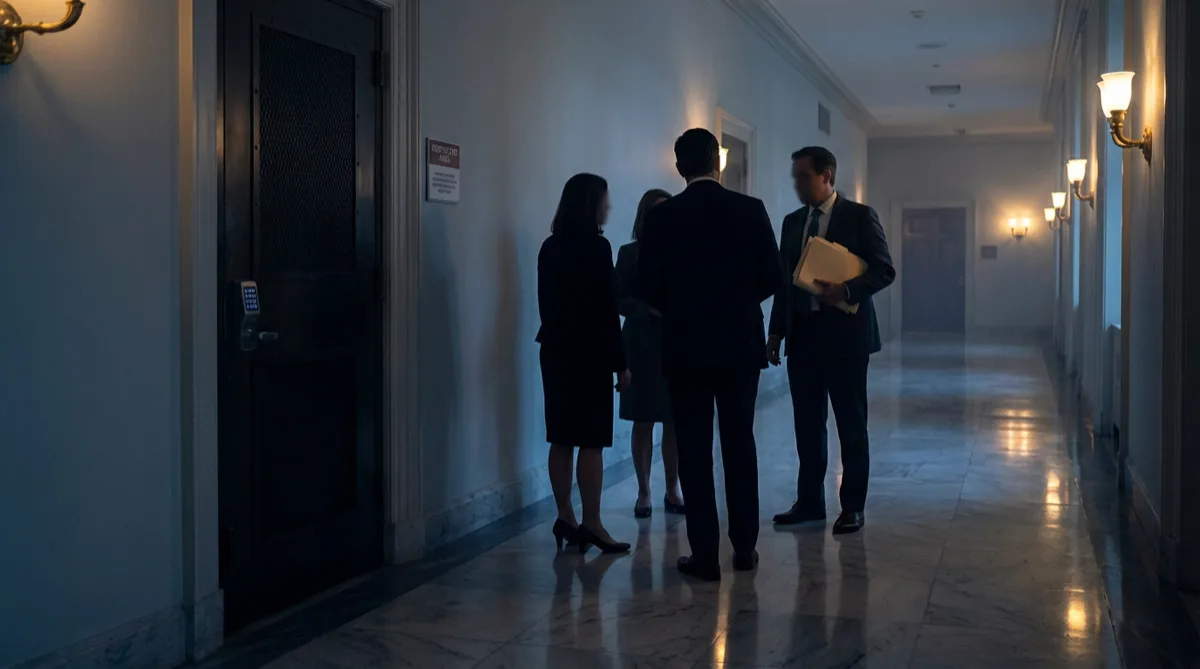
“Right now we’re focused on getting some people in a SCIF… who would not be comfortable at this time going public.”
That’s Rep. Eric Burlison (R-MO), speaking in a December 16, 2025 interview with Ask a Pol UAP. He confirmed the House UAP Caucus has identified a new whistleblower – and that the priority is classified settings, not cameras.
The New Whistleblower
Details are thin by design. Burlison described the lead carefully:
“There’s one person that’s a new whistleblower that we have a lead on that might go public.”
No name. No specific claims. No program names or evidence have been publicly detailed. What Burlison made clear is that the caucus is pursuing people who have information but won’t share it in an open setting – and that the SCIF is where the real conversations need to happen.
Rep. Nancy Mace (R-SC) echoed the classified-first approach in her own Ask a Pol UAP interview five days later:
“I want to get in a SCIF with Rubio.”
Mace was referring to Secretary of State Marco Rubio, who – as former chair of the Senate Intelligence Committee – has long been briefed on UAP matters. Her interest in questioning him in a classified setting signals that House members believe there is information that cannot surface in public hearings.
Why the Strategy Shifted
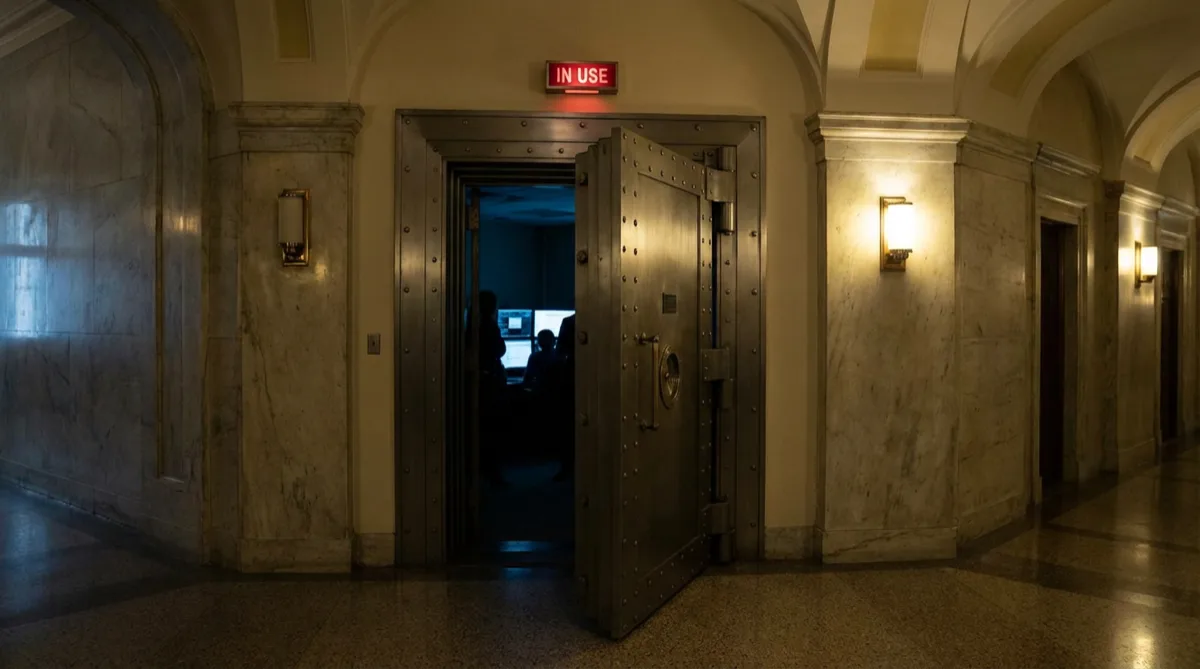
The Grusch hearing in July 2023 generated enormous public interest but ran into a wall: Grusch repeatedly said he could not discuss specifics in an unclassified setting. The most substantive claims were always just out of reach.
Congress learned from that. The new approach – SCIF first, public hearing second – is designed to let potential witnesses speak freely under classification protections before deciding what can be disclosed publicly. Burlison said a second public hearing is “potentially” in the works, but only after classified sessions happen.
This also reflects the reality that potential witnesses may face career consequences. Whistleblower protections exist on paper, but AARO’s track record on accountability and the Pentagon’s resistance to disclosure have made insiders cautious.
Grusch’s New Role
Grusch hasn’t disappeared. In March 2025, Burlison formally brought him on as a Special Advisor for UAP transparency work tied to the House Oversight Task Force on the Declassification of Federal Secrets.
“The American people deserve answers about UAPs.”
Burlison says Grusch remains on staff into 2026, advising on hearings and briefings as needed. The role marks a shift from Grusch’s 2023 public testimony to behind-the-scenes guidance – helping lawmakers know what questions to ask and who to ask them to.
What Congress Built Into Law
While the whistleblower search plays out, Congress quietly embedded significant new UAP oversight tools into the FY2026 National Defense Authorization Act, enacted December 18, 2025, as Public Law 119-60.
Three provisions in Subtitle E (Sections 1671–1673) amend 50 U.S.C. § 3373:
NORAD/NORTHCOM Intercept Briefings
AARO must now include details from NORAD and NORTHCOM UAP intercepts in its congressional briefings – retroactive to January 1, 2004. This means two decades of military intercept data involving unidentified objects in North American airspace must be accounted for.
Streamlined Data Access
Duplicative reporting requirements were repealed and replaced with mandates for immediate data availability to AARO from other agencies. The goal: fewer bureaucratic bottlenecks preventing the office from accessing relevant information.
Classification Guide Accounting
The Department of Defense must now provide an accounting of all UAP-related security classification guides and may create a consolidated classification matrix. This directly targets one of the biggest complaints from transparency advocates – that UAP information is scattered across compartmented programs with no central map of what’s classified and why.
A broader federal UAP records framework also took effect: agencies must review and identify UAP records within 300 days of enactment, with full disclosure generally required within 25 years of record creation unless the president certifies an exception.
The Executive Branch Enters
On February 20, 2026, President Donald Trump directed the Pentagon and other agencies to begin identifying and releasing government files related to aliens, UAPs, and UFOs. Defense Secretary Pete Hegseth was named as the point person.
The executive order adds a second pressure vector. Congress has been building legislative hooks for years; now the White House is applying its own force – however unclear the timeline or scope.
AARO and the Pentagon have not provided updates on how either the NDAA provisions or the presidential directive will be implemented. The Pentagon did not respond to DefenseScoop’s request for an update on AARO’s current caseload.
What AARO Has Said
For context, AARO’s official position remains unchanged:
“It is also important to underscore that, to date, AARO has discovered no verifiable evidence of extraterrestrial beings, activity or technology.”
That statement, from a November 2024 DoD release, covers AARO’s reviewed cases. Skeptics note that many UAP reports are eventually attributed to mundane objects – balloons, drones, birds – when sufficient data is available.
The question Congress is now asking is whether AARO has been given sufficient data in the first place.
Timeline
| Date | Event |
|---|---|
| July 26, 2023 | Grusch testifies before House Oversight subcommittee |
| March 27, 2025 | Burlison hires Grusch as Special Advisor |
| Aug 29, 2025 | Burlison submits UAP Disclosure Act amendment to FY2026 NDAA |
| Sept 3, 2025 | UAP Whistleblower Protection Act introduced in the House |
| Sept 9, 2025 | House Oversight Task Force hearing on UAP transparency |
| Dec 10, 2025 | FY2026 NDAA UAP provisions reported by DefenseScoop |
| Dec 16, 2025 | Burlison reveals new whistleblower lead and SCIF strategy |
| Dec 18, 2025 | FY2026 NDAA enacted as Public Law 119-60 |
| Dec 21, 2025 | Mace says she wants classified briefing with Rubio |
| Feb 20, 2026 | Trump directs agencies to begin releasing UAP/UFO files |
Sources: Ask a Pol UAP – Burlison interview · Ask a Pol UAP – Mace interview · DefenseScoop – NDAA provisions · DefenseScoop – Trump directive · Reuters · AP · House Oversight hearing page · Burlison – Grusch advisor announcement · Burlison – UAP Disclosure Act · FY2026 NDAA (S.1071) · NARA – UAP records · DoD – AARO annual report