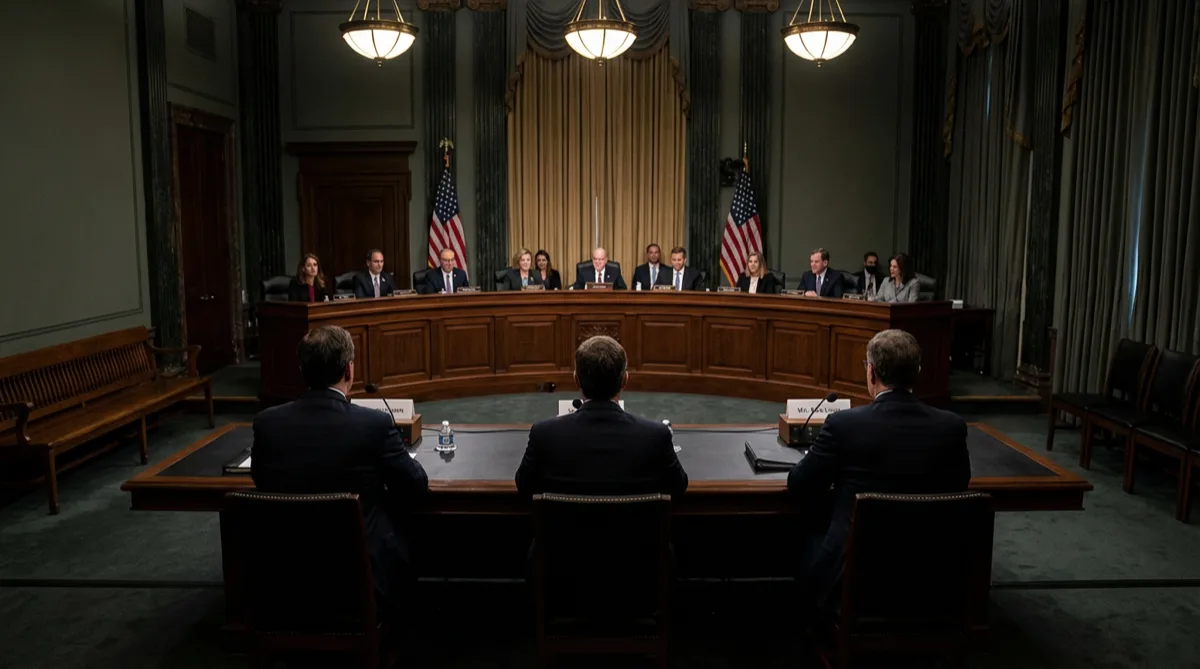
On the morning of July 26, 2023, three men sat at a witness table inside a packed House Oversight subcommittee hearing room. Two were decorated Navy aviators. The third was a former Air Force intelligence officer named David Grusch – and what he said under oath set off the most significant UAP controversy in decades.
Grusch told Congress he had been informed, through his official duties, that the U.S. government operates a secret, multi-decade program to retrieve and reverse-engineer craft of non-human origin. He said he was denied access when he tried to learn more. He said he was retaliated against for reporting it.
The Pentagon has denied all of it. But Congress is still digging.
Who Is David Grusch?
David Charles Grusch served 14 years in the U.S. intelligence community. He held a GS-15 position at the National Geospatial-Intelligence Agency and, from 2019 onward, was tasked with identifying special access programs relevant to the Unidentified Aerial Phenomena Task Force (UAPTF) – the Pentagon’s predecessor to AARO.
In 2021, Grusch began providing classified UAP-related information to the DoD Inspector General. His attorney, Charles McCullough III – a former Intelligence Community Inspector General – filed a formal whistleblower reprisal complaint under PPD-19 in mid-2022.
By July 2022, the IC Inspector General had deemed Grusch’s complaint “credible and urgent.”
The Story Breaks
On June 5, 2023, The Debrief published a report by journalists Leslie Kean and Ralph Blumenthal laying out Grusch’s core allegations: that the U.S. government and defense contractors possess retrieved UAP materials of non-human origin, and that this information has been illegally withheld from Congress.
Six days later, NewsNation aired a prime-time interview with Grusch, bringing the claims to a mass audience.
The Pentagon responded almost immediately. A DoD spokesperson stated the department “has not found verifiable information to substantiate claims that programs regarding the possession or reverse-engineering of extraterrestrial materials have existed.”
The Hearing
On July 26, the House Oversight Subcommittee on National Security convened a public hearing titled “Unidentified Anomalous Phenomena: Implications on National Security, Public Safety, and Government Transparency.”
Chaired by Rep. Glenn Grothman with ranking member Rep. Robert Garcia, the hearing featured three witnesses:
- David Grusch – the whistleblower
- Ryan Graves – former Navy F/A-18 pilot and founder of Americans for Safe Aerospace
- David Fravor – retired Navy Commander who encountered the 2004 “Tic Tac” object off the coast of San Diego
What Grusch Said
Grusch’s testimony was careful and specific about what he could say in an unclassified setting. His core statement:
“I was informed, in the course of my official duties, of a multi-decade UAP crash retrieval and reverse engineering program to which I was denied access to those additional read-on’s.”
When pressed on the nature of the evidence, he acknowledged his claims are based on information relayed to him by others:
“But as I stand here under oath now, I am speaking to the facts as I have been told them.”
He alleged that classified information about UAP had been deliberately withheld from Congress – a claim that fueled bipartisan anger on the committee.
What Graves and Fravor Said
Ryan Graves focused on the national security and aviation safety dimensions, testifying that UAP encounters are routine and grossly underreported:
“As we convene here, UAP are in our airspace, but they are grossly underreported.”
He also made a striking claim about classification:
“Since 2021, all UAP videos are classified as secret or above.”
David Fravor described his 2004 encounter with the now-famous “Tic Tac” object during operations with the USS Nimitz carrier strike group:
“As all 4 looked down we saw a small white Tic Tac shaped object with the longitudinal axis pointing N/S”
Fravor described an object with no visible propulsion that outmaneuvered his F/A-18F Super Hornet – an account that remains one of the most cited UAP cases in military history.
What Happened After
The hearing triggered a wave of legislative action.
| Date | Event |
|---|---|
| July 14, 2023 | Senators Schumer and Rounds introduce the UAP Disclosure Act as an NDAA amendment |
| July 26, 2023 | House Oversight hearing with Grusch, Graves, and Fravor |
| August 21, 2023 | Reps. Burchett and Luna send letter to IC Inspector General seeking follow-up |
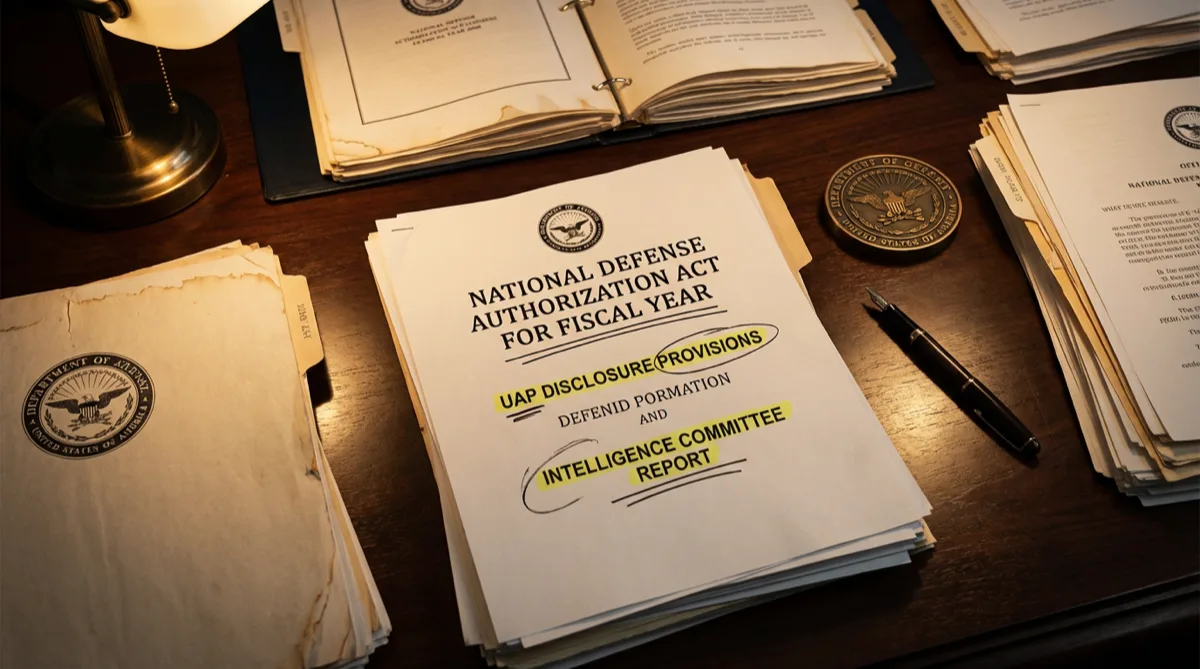
| December 22, 2023 | FY2024 NDAA signed into law with UAP records collection requirements |
| February 2024 | AARO publishes Historical Record Report Vol. I – no evidence of ET technology found |
| November 2024 | AARO annual report covers 757 cases – reiterates no evidence of recovered non-human material |
The UAP Disclosure Act of 2023, modeled after the JFK Assassination Records Collection Act, was introduced by Senate Majority Leader Chuck Schumer and Sen. Mike Rounds. It proposed a framework for collecting and declassifying UAP records. The final version signed into law was significantly narrowed during conference negotiations, but it still established new UAP records requirements.
In February 2026, President Trump directed the Pentagon to begin releasing UFO files – a move that built on the momentum Grusch’s testimony helped create.
The Pentagon’s Position
The official response has been consistent and unambiguous.
AARO’s Historical Record Report (February 2024) stated the office found “no verifiable evidence that the U.S. government or private companies possess extraterrestrial technology” and no evidence of a hidden reverse-engineering program.
The FY2024 annual report (November 2024) reiterated:
“AARO possesses no data to indicate the capture or exploitation of UAP.”
Former AARO director Sean Kirkpatrick, who led the office during much of 2022–2023, was the public face of these denials. His successor, Dr. Jon Kosloski, continued the same line in November 2024 testimony.
Why It Still Matters
Regardless of whether Grusch’s specific allegations prove true, the hearing changed the landscape. Members of Congress from both parties publicly stated they believe the executive branch is withholding UAP information. New legislation was passed. Oversight mechanisms were strengthened. And the stigma around reporting UAP – long a career risk for military personnel – took another hit.
As of early 2026, Congress continues to push for disclosure, a new whistleblower has emerged, and Grusch himself remains a special advisor on UAP issues for Rep. Eric Burlison.
The question Grusch raised in that hearing room – whether the U.S. government is hiding evidence of non-human technology from its own Congress – has not been answered. Only the asking has become harder to ignore.
Sources: House Oversight Committee Hearing Page · Grusch Written Statement (PDF) · Graves Written Testimony (PDF) · Fravor Written Statement (PDF) · The Debrief · The Guardian · AARO Historical Record Report (PDF) · FY2024 UAP Annual Report (PDF) · Schumer-Rounds UAP Disclosure Act (Senate Press Release) · Rep. Burchett ICIG Letter