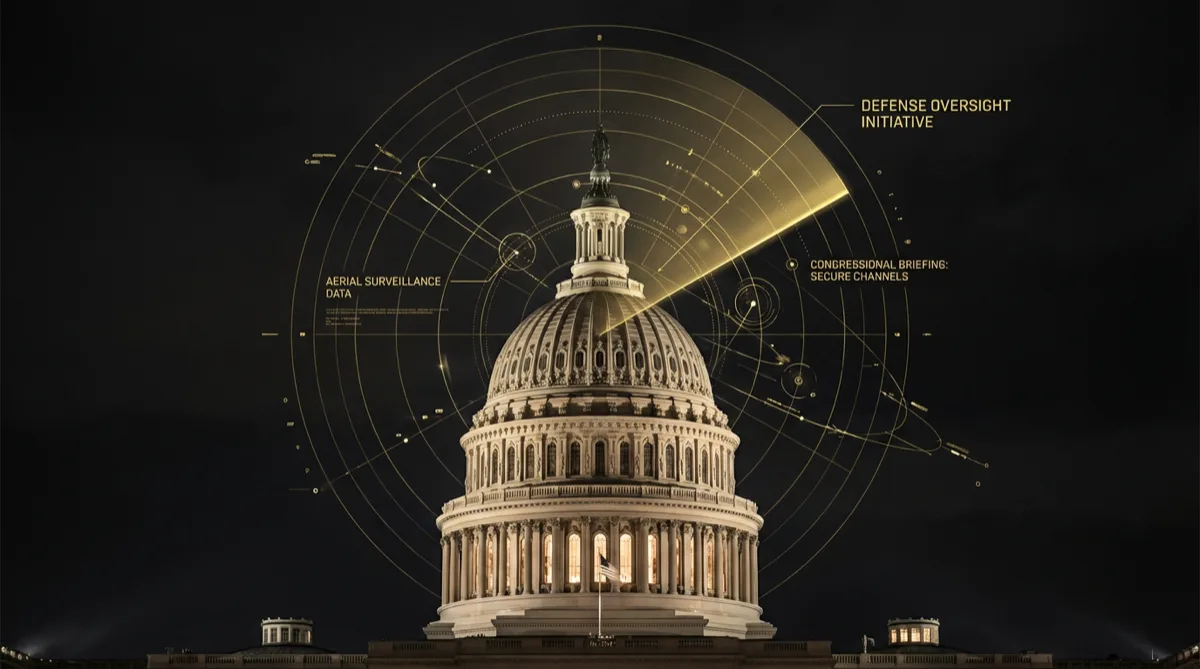
For years, members of Congress have complained about a basic problem: they don’t know what the military knows about unidentified objects in American airspace. Briefings have been incomplete. Reports have been late – or never delivered at all. Key data from the commands responsible for defending North American airspace has simply never been shared.
On December 18, 2025, President Trump signed the FY2026 National Defense Authorization Act into law. Buried in the 1,800-page defense bill are three provisions that attempt to fix the information gap – and the most significant one reaches back two decades.
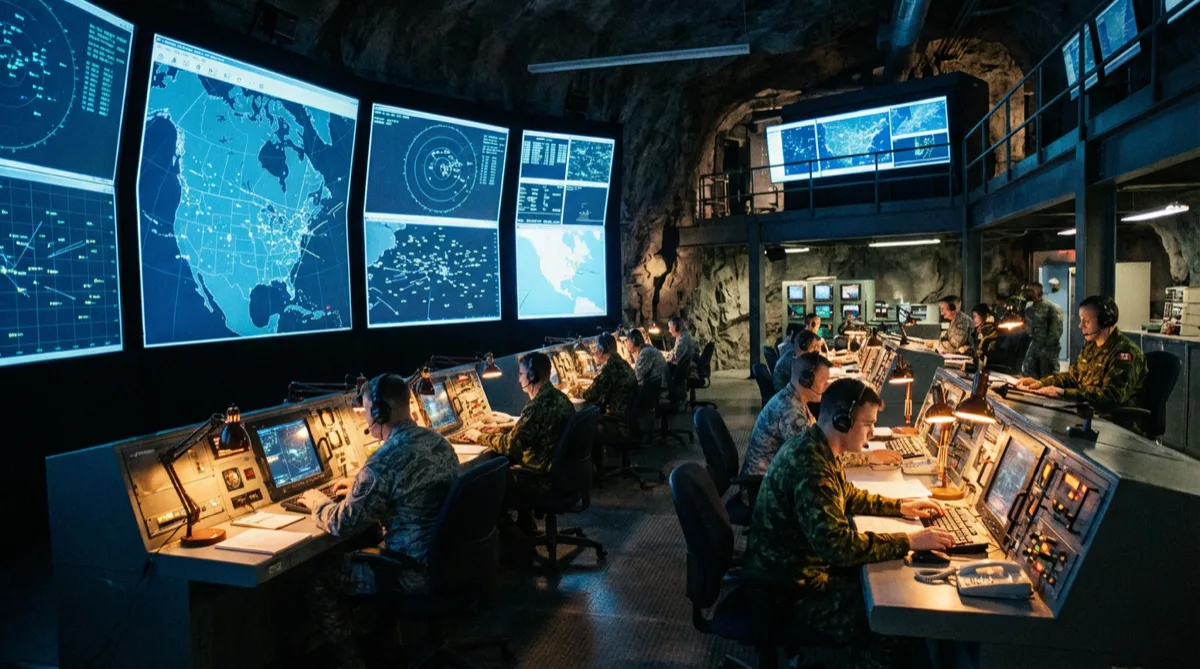
Section 1671 now requires the Pentagon’s All-domain Anomaly Resolution Office (AARO) to include detailed summaries of UAP intercepts by NORAD and U.S. Northern Command in its classified briefings to Congress. The first briefing must cover every intercept not previously disclosed going back to January 1, 2004.
What the Law Actually Requires
The FY2026 NDAA (Public Law 119-60) amends the existing AARO statute – 50 U.S.C. § 3373 – with three new mandates:
1. NORAD and USNORTHCOM Intercept Briefings (Sec. 1671)
Each of AARO’s semiannual classified briefings to Congress must now include:
- The number, location, and nature of UAP intercepts conducted by NORAD or USNORTHCOM
- The procedures, protocols, and data collected during those intercepts
- Notification to Congress if NORAD or USNORTHCOM fails to provide timely information to AARO
The first post-enactment briefing carries an additional requirement: it must include any intercepts not previously provided that occurred from January 1, 2004, through the briefing period – effectively a 20-year backfill.
2. Elimination of Duplicative Reporting (Sec. 1672)
The law repeals a separate quarterly UAP reporting requirement (50 U.S.C. 3373a) that originated in the FY2022 Intelligence Authorization Act. In its place, it reinforces that the Director of National Intelligence and the Secretary of Defense must require all intelligence community elements and DoD components to make UAP data available to AARO immediately.
3. Classification Guide Accounting (Sec. 1673)
AARO Director Dr. Jon T. Kosloski must complete an accounting of all security classification guides that affect UAP investigations and reports. The provision authorizes AARO to issue a consolidated UAP security classification matrix. Results are due in AARO’s 2026 annual report, with a hard deadline of June 16, 2026 – 180 days after enactment.
This provision matters because AARO has faced persistent criticism over classification practices that critics say prevent meaningful information sharing, even with cleared lawmakers.
Why NORAD Intercept Data Matters
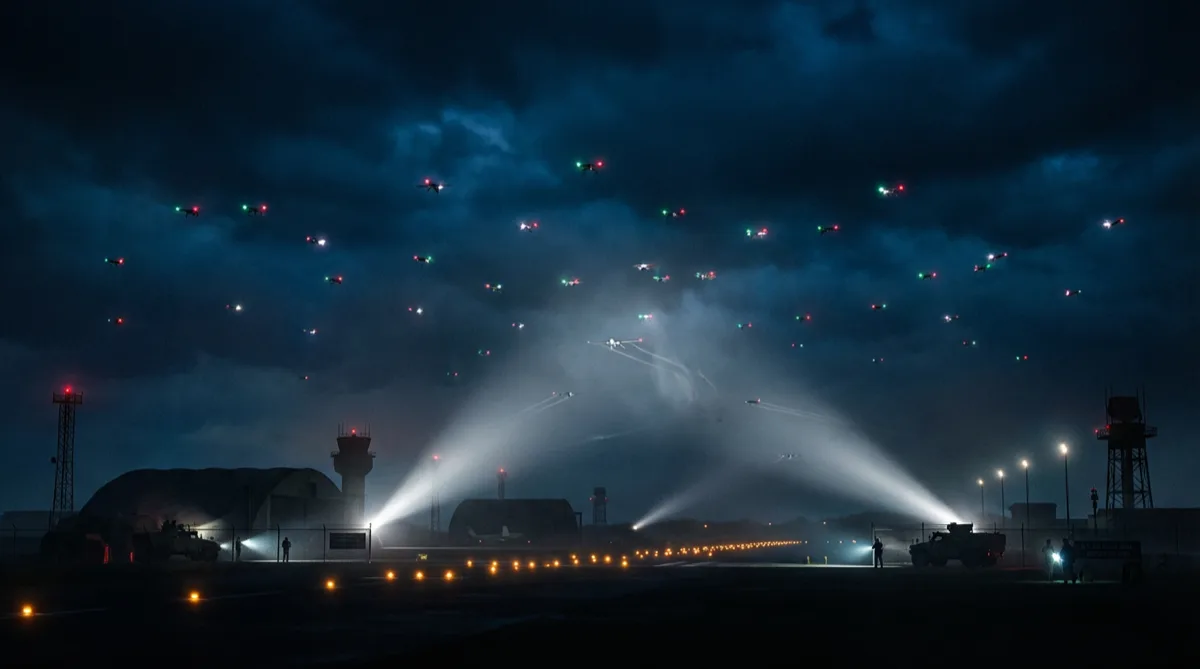
The intercept requirement didn’t emerge in a vacuum. Over the past two years, unauthorized drone incursions over U.S. military installations have surged – and the military’s own leaders have said so publicly.
Gen. Gregory M. Guillot, commander of both NORAD and USNORTHCOM, told Breaking Defense in October 2025:
“We’re between [about] one and two incursions per day”
That daily rate spans dozens of DoD installations nationwide. Notable incidents include:
- December 2023: Unidentified drone swarms over Joint Base Langley-Eustis in Virginia prompted interagency scrambles
- November 2024: Widespread “mystery drone” reports near military installations in New Jersey, triggering a federal investigation and calls for expanded counter-drone authorities
- January 2026: The DoD Inspector General issued a management advisory calling for “immediate attention” to protect military assets against unmanned aircraft systems, citing policy and coordination gaps
In April 2025, NORTHCOM sent an updated counter-drone standard operating procedure to all U.S. bases – a tacit acknowledgment that existing protocols weren’t working. By October, the military launched Exercise Falcon Peak, a large-scale counter-UAS drill designed to stress-test the new procedures.
Congress wants to know: how many of these incursions involved objects that couldn’t be identified? What data was collected? And why wasn’t any of this being shared with lawmakers?
How the Bill Became Law
The FY2026 NDAA followed a months-long legislative grind:
| Date | Event |
|---|---|
| June 9, 2025 | House NDAA introduced as H.R. 3838 |
| July 15, 2025 | Senate Armed Services Committee reported S. 2296 |
| September 10, 2025 | House passed H.R. 3838 (231–196) |
| October 9, 2025 | Senate passed S. 2296 (77–20) |
| December 8, 2025 | Conference agreement released |
| December 10, 2025 | House passed negotiated package (312–112) |
| December 17, 2025 | Senate agreed (77–20) |
| December 18, 2025 | Signed into law (P.L. 119-60) |
The UAP provisions survived the conference process intact – a notable outcome given that the more ambitious UAP Disclosure Act, proposed by Senators Schumer and Rounds during the FY2024 NDAA cycle, was largely stripped from the final bill that year.
Sen. Kirsten Gillibrand (D-NY), a member of the Senate Armed Services Committee, highlighted the UAP provisions in her post-passage press release:
“Strengthens UAP oversight by requiring the All-domain Anomaly Resolution Office (AARO) to brief Congress on UAP intercepts by NORTHCOM and NORAD…”
Jordan Flowers, executive director of the Disclosure Foundation, called the provisions incremental but concrete:
“Congress’ inclusion of these three UAP provisions in the FY26 NDAA reflects a meaningful, if incremental, step toward transparency and oversight.”
“Creating a statutory obligation to brief Congress on these intercepts is a concrete step toward correcting that deficiency.”
Context: A Pattern of Congressional Pressure
The FY2026 NDAA provisions are part of a multi-year escalation in congressional UAP oversight:
- The FY2022 NDAA created AARO and established recurring congressional briefings and reports under 50 U.S.C. 3373
- David Grusch’s 2023 testimony before the House Oversight Committee intensified bipartisan interest in UAP transparency
- AARO’s FY2024 annual report logged 757 UAP cases, resolving most but flagging 21 for further analysis
- In February 2026, President Trump directed the Pentagon to begin releasing UFO-related files – though no timeline was set
- Congress is now pursuing a new UAP whistleblower through classified channels rather than public hearings
The NORAD intercept mandate adds a specific, enforceable demand to this broader push. Unlike executive orders or voluntary disclosures, it carries the weight of statute.
What It Won’t Do
There are real limits to what these provisions can deliver.
The underlying briefings are classified. Even if AARO receives and presents 20 years of NORAD intercept data, the public may never see it. The new mandate may not materially change what the Pentagon is willing to declassify.
The repeal of the quarterly reporting requirement under Section 1672 also draws scrutiny. While framed as eliminating redundancy, it removes one channel of recurring UAP reporting – even as other reporting paths remain.
And the classification-guide accounting, while a meaningful first step, doesn’t guarantee declassification. It requires AARO to identify which guides are constraining UAP-related information – not to lift those constraints.
What Comes Next
The clock is now ticking on several deadlines:
- AARO’s next semiannual classified briefing must include the 20-year NORAD intercept backfill
- June 16, 2026: AARO must complete its accounting of UAP-related classification guides
- AARO’s 2026 annual report must include the classification-guide findings
- The semiannual briefing requirement runs through December 31, 2026
Whether NORAD and USNORTHCOM comply fully – and whether AARO reports any non-compliance to Congress – will be the first real test of whether this law has teeth.
Sources: FY2026 NDAA enrolled text (GovInfo) · CRS FY2026 NDAA Status · DefenseScoop · Sen. Gillibrand press release · 50 U.S.C. § 3373 (Cornell LII) · DoD IG Advisory (DODIG-2026-045) · Defense News · Breaking Defense (Oct 2025) · Breaking Defense (Apr 2025) · Reuters · House Oversight hearing · NYU JLPP – UAP Disclosure Act analysis