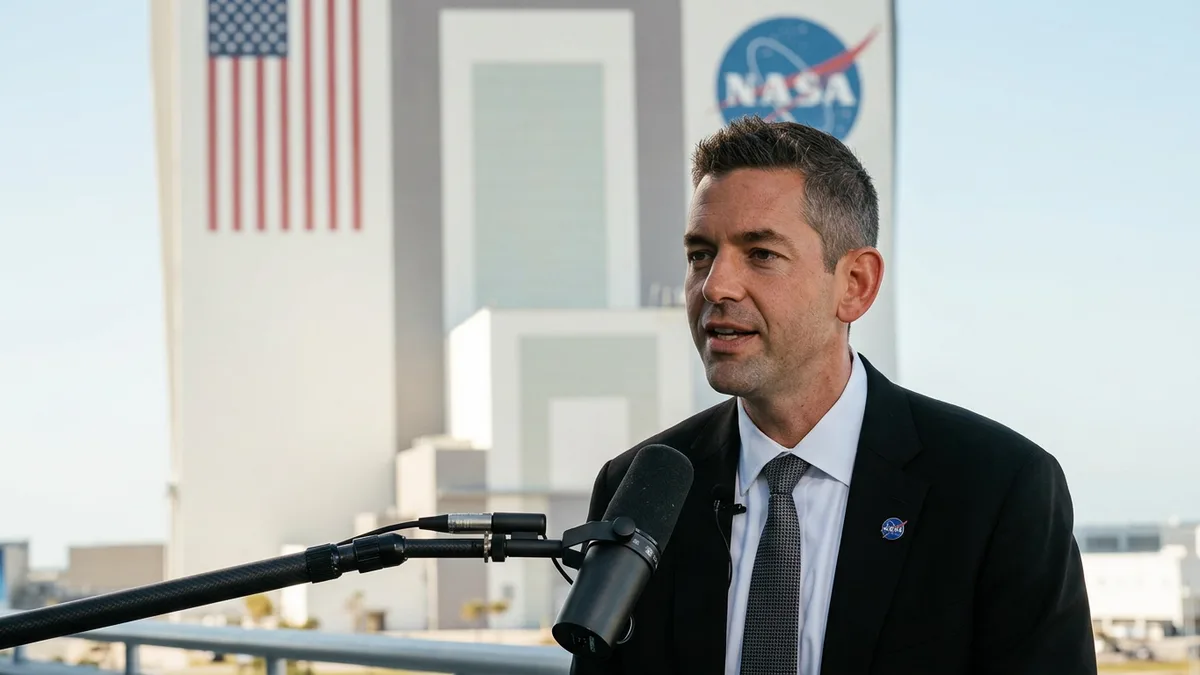
Everything below through the exchange about the octocopter is taken only from UFOUAP’s transcript of a short video clip supplied to our newsroom: Benny Johnson interviewing Sean Duffy (The Benny Show). We are not using dialogue or structure from any other podcast.
What Johnson asks
Johnson refers to an astronaut he says they had just discussed – Christina (the transcript picks up “Christina Co.” from audio; he means Christina Koch, Artemis II mission specialist). He says she is “going viral” for talking about the Moon base and how it is necessary to get us to Mars, and that this is “the best chance that we have of potentially finding life out in the wide universe.” He asks Duffy for his take and whether he believes there is life out there.
What Duffy says (from the clip)
Duffy says he has a “slightly different take.” He describes the common intuition: people look at the night sky, think of two trillion galaxies, stars, exoplanets in Goldilocks zones, and conclude there must be life somewhere. He says there is a chance there could be life everywhere – and that it does not have to look like us or have “the tentacles like you have in the movies.”
On Mars, he offers a personal probability:
If we can get to Mars and we can bring samples back, I’d put it at a better 90% chance that we could prove there is some there was some microbial life on Mars.
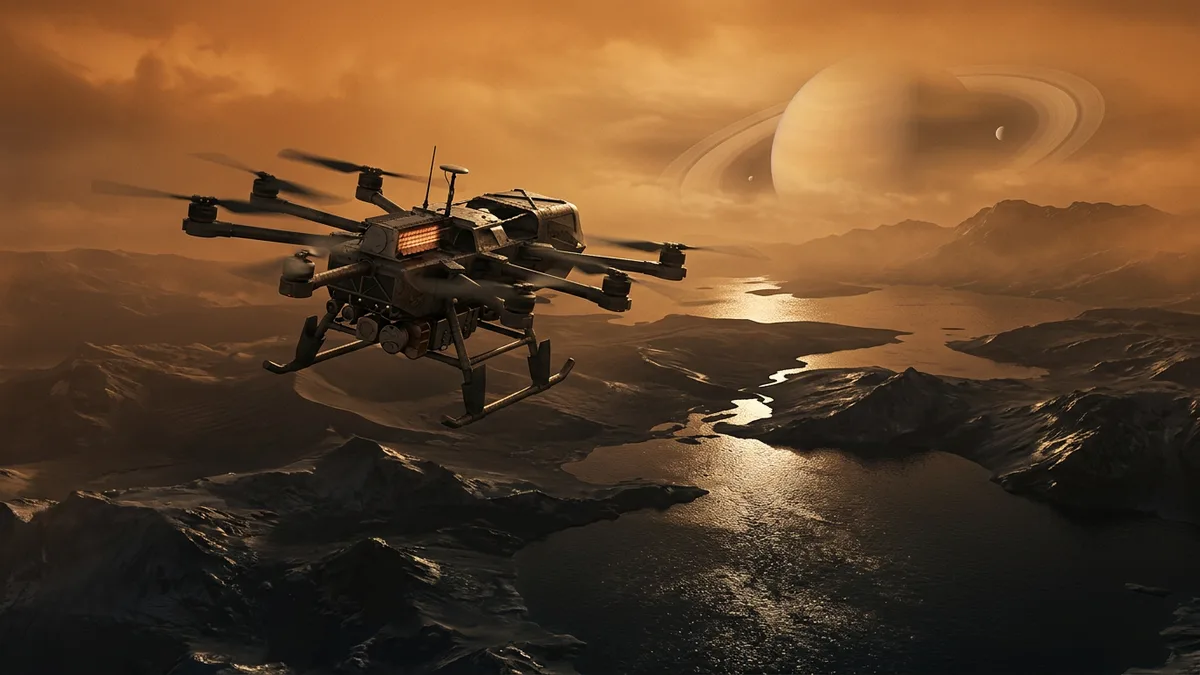
He then mentions Europa Clipper going to Jupiter’s moon Europa, where “we think there could also be biosignatures.” He says NASA is launching a nuclear-powered octocopter in 2028 to explore Saturn’s moon Titan.
Now what if you find biosignatures there? It changes the whole equation from looking up and saying, well, the odds would say surely it’s out there somewhere to what if in our own solar system, it could be everywhere. That would be, I think the most, I mean, it would be the most like consequential discovery in human history, right? And that’s what we do here at NASA. We go out and try and unlock the secrets of the universe.
Johnson asks what an octocopter is. Duffy calls it “cool,” compares it to professional drones used for filming a movie rather than kids’ toys, says it is nuclear-powered because it must operate at Titan, and that it will fly around and search for signs of life and “drone the planet” once there.
Why this clip matters for the UAP conversation
When senior officials talk in public about life elsewhere, biosignatures, and solar-system destinations, those sound bites travel in the same information ecosystem as UAP and disclosure discourse – even though NASA formally treats UAP as a separate line of work from astrobiology (see our 2023 panel overview). This segment is short, conversational, and speculative; it shows how Duffy frames the topic for a general audience, not how NASA science teams publish conclusions.