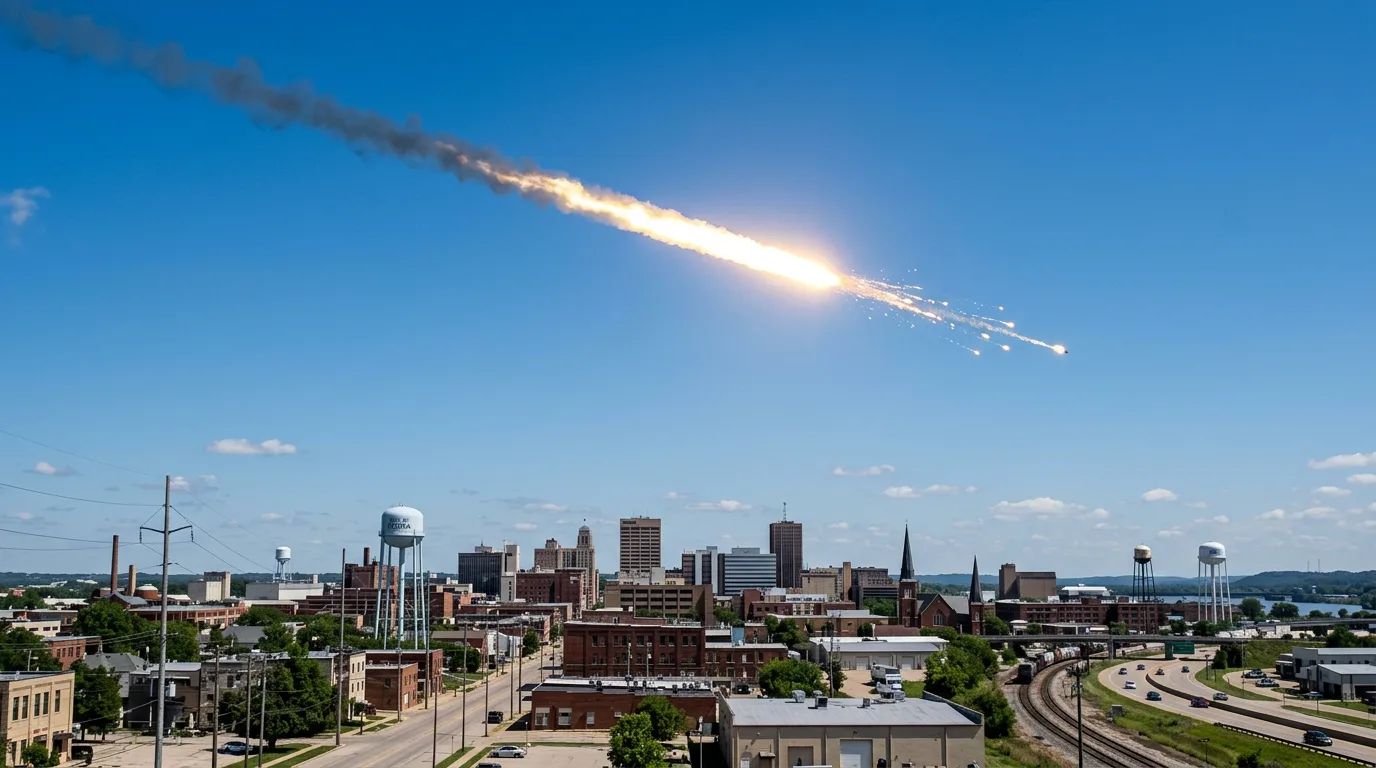
On March 17, 2026, at approximately 8:57 AM Eastern time, a small asteroid roughly six feet in diameter entered Earth’s atmosphere over Lake Erie. It was moving at 45,000 miles per hour. It did not burn up quietly. It fragmented above the city of Cleveland, producing sonic booms heard across the metropolitan area, and scattered meteorites across Medina County, Ohio. The National Weather Service confirmed the event using GOES Geostationary Lightning Mapper imagery.
Four days later, another meteorite punched through the roof of a house in North Houston.
Four days before that, a daylight bolide over Western Europe generated 3,229 witness reports and dropped fragments later identified as diogenites – achondrite meteorites traced to the asteroid Vesta.
Three confirmed meteorite falls in a single month. And those are just the ones that hit the ground.
The Numbers
The American Meteor Society has operated a public fireball reporting system since 2005. On March 25, 2026, AMS Operations Manager Mike Hankey published a detailed statistical analysis of the first quarter’s data. His opening line cut to the point:
“Since the start of 2026, the AMS has been fielding a growing number of inquiries from journalists, scientists, and the public about whether fireball activity has increased. The short answer is yes – but the details matter.”
The total Q1 event count for 2026 – covering January 1 through March 24 – was 2,046 fireball events. That is the highest in the AMS’s 15-year Q1 series. But the raw number alone is not the story. In 2022, the Q1 count was 2,037. In 2021, it was 1,947. The total is elevated, but not unprecedented.
What is unprecedented is what happens when you look at the high end.
| Metric | Q1 2026 | 2021–2025 Average |
|---|---|---|
| Total fireball events | 2,046 | ~1,834 |
| Events with 25+ witness reports | 61 | ~43 |
| Events with 50+ witness reports | 38 | ~18 |
| Events with 100+ witness reports | 14 | ~7 |
| Long-duration reports (4+ seconds) | 1,693 | ~651 (prior high) |
| Sonic boom events (of 50+ report group) | 30 of 38 | — |
The pattern at the high witness tiers is striking. Events with 50+ witnesses more than doubled. Events with 100+ witnesses doubled. And of the 38 large events in Q1, 30 produced audible sonic booms – physical atmospheric effects that have nothing to do with smartphones or social media algorithms.
“Thirty large fireball events producing audible booms in a single quarter means roughly one every three days.” – Mike Hankey, AMS
The long-duration count is equally difficult to explain away. AMS logged 1,693 individual fireball reports lasting four seconds or longer in Q1 2026. The previous record for any Q1 was 651 in 2021. That is not a marginal increase. It is a factor of 2.6.
Is It Just More Phones?
This is the obvious question, and the AMS addressed it directly.
The AMS fireball reporting platform has been online since 2005 and smartphone adoption saturated the U.S. market by 2016–2018. If more phones were the primary driver, the effect should appear as a steady upward trend across all tiers – not a sudden spike at the top end with normal counts at the bottom.
The AMS analysis rules out several explanations as primary causes: increased smartphone adoption (platform mature for a decade), a new meteor shower (no major Q1 shower exists), the classic February fireball seasonal bump alone (the signal is strongest in March and larger than any historical February bump), and geographic or time-of-day bias.
What the AMS cannot rule out is AI.
“When someone witnesses a fireball today, they may ask ChatGPT, Siri, or Google’s AI ‘I just saw a fireball – where do I report it?’ and be directed to the AMS. This would inflate witness counts per event without changing the actual number of fireballs – which is, notably, the exact pattern we observe: normal total event counts but elevated reports per event at the high end.” – Mike Hankey, AMS
This is a genuinely honest assessment. AI assistants could plausibly drive more witnesses per event to the reporting form without any change in the underlying meteor flux. That would explain the elevated per-event witness counts.
But it does not explain the sonic booms. It does not explain three meteorite falls in a month. It does not explain 1,693 long-duration sightings versus 651. And it does not explain the radiant clustering the AMS found: 12 Q1 fireballs traced to a tight Anthelion zone versus 1–6 per year in 2021–2025, and 11 events with high-declination radiants versus 5 as the prior maximum.
“What has changed is that a large fraction of events that would normally draw 25–49 witnesses instead drew 50, 100, or even 200+ witnesses. The distribution didn’t broaden – it shifted upward.” – Mike Hankey, AMS
March 2026: A Timeline
The concentration of large events in March alone is unusual:
- March 3 – Bright fireball over Vancouver and Washington state; sonic boom reported
- March 8 – Daytime bolide over Western Europe; 3,229 AMS reports, 174 delayed-sound reports; recovered specimens identified as diogenites (Vesta-family meteorites)
- March 11 – Major fireball over France and Spain; 236 AMS reports
- March 17 – Daytime bolide over Ohio/Pennsylvania; 222 AMS reports; sonic booms across Cleveland; NASA published strewn-field analysis
- March 21 – Houston-area daylight fireball; meteorite through a North Houston home roof; NASA estimated ~26 tons TNT equivalent energy
- March 23 – Bright green fireball over California, Arizona, and Nevada; hundreds of AMS reports
Six events large enough to make news in 23 days. March 2026’s mean witness count per event was 142.7, versus 49.4 for the next-highest March on record (2021). Even excluding the massive European event, the remaining 41 March events still averaged ~67 reports each.
What Hit the Ground
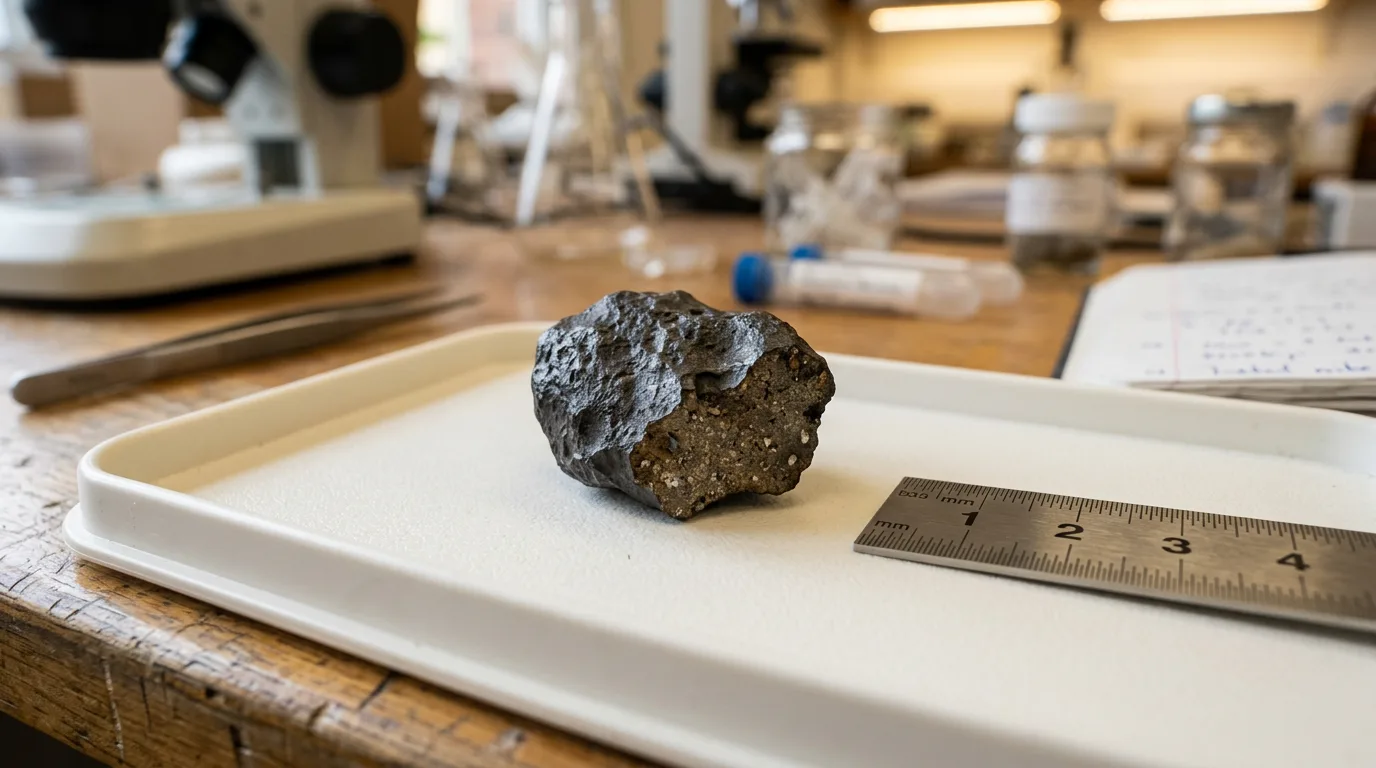
The March 8 European fireball produced meteorites classified as diogenites – a rare type of achondrite originating from the asteroid 4 Vesta. These are not ordinary chondrites. Their identification tells researchers something specific about the source body and the orbital mechanics that delivered the material to Earth.
The March 17 Ohio event is documented by NASA’s Astromaterials Research and Exploration Science division under the designation “Windfall-Oh.” NASA’s event page includes a detail that matters beyond the immediate event:
“This fall is important because an asteroid fell over a large city without the forewarning that skywatch programs have become increasingly adept at providing. Evidence from orbital reconstruction indicates this asteroid approached Earth from a high angle, while skywatch programs tend to focus their attention along the solar system’s equatorial plane.” – NASA JSC ARES
A six-foot asteroid entered over a major U.S. city at 45,000 mph from an angle that planetary defense surveys were not watching. That is worth sitting with.
The March 21 Houston meteorite was dramatic in a different way. It penetrated a residential roof. Ponderosa Fire Department chief Fred Windisch responded to the scene. NASA JSC estimated the event energy at approximately 26 tons of TNT equivalent, with GOES satellite detection confirming the atmospheric entry.
“It is ironic that NASA spends millions and billions of dollars to collect rocks from space, and one comes to visit all by itself.” – Carolyn Sumners, vice president for astronomy, Houston Museum of Natural Science
The Answer
Is the fireball surge real or just trending?
The AMS’s own conclusion – and this is worth quoting in full – is that the question itself deserves more attention than it is currently getting:
“Whether this reflects a genuine change in the near-Earth meteoroid environment, an amplification of reporting through AI and social media, or some combination of both – we cannot yet say definitively. What we can say is that the question deserves both public awareness and scientific attention.” – Mike Hankey, AMS
The most honest reading of the data is: both, but not equally.
AI assistants are likely driving more witnesses to the AMS reporting form per event. That explains part of the per-event witness count spike. But the total event count is also up. The sonic boom frequency is physically measurable and has no reporting-artifact explanation. Three confirmed meteorite falls in one month is a material fact. And 1,693 long-duration sightings versus a prior high of 651 is a change in the character of what is entering the atmosphere, not just who is watching.
Something has shifted in the near-Earth environment. How much is AI and how much is asteroids remains an open question. But the rocks coming through roofs in Houston are not a social media trend.
How to Report a Fireball
If you witness a fireball, report it to the American Meteor Society at amsmeteors.org. Reports include your location, time, direction, duration, brightness, color, and any sound. The more witnesses who report the same event, the more accurately the AMS can reconstruct its trajectory and determine whether meteorites reached the ground.
NASA also maintains the CNEOS Fireball and Bolide Reports database for instrumentally detected events.
Sources
- “Has Something Changed in the Near-Earth Meteoroid Environment?” – American Meteor Society, March 25, 2026
- “A flurry of fireballs! Is there a reason for the uptick?” – EarthSky, March 26, 2026
- “Rare fireball spotted over eastern US caused a sonic boom” – CNN, March 17, 2026
- “Will the Ohio meteor fall yield a bonanza of space rocks?” – EarthSky, March 20, 2026
- “Windfall-Oh Meteorite Fall” – NASA JSC ARES
- “Houston, TX Meteorite Fall” – NASA JSC ARES
- “Meteors are more common than you might think” – Houston Public Media, March 23, 2026
- “Bright fireball seen over California, Arizona and Nevada” – The Watchers, March 24, 2026
- “Meteors & Meteorites Facts” – NASA Science
- “CNEOS Fireball and Bolide Reports” – NASA JPL