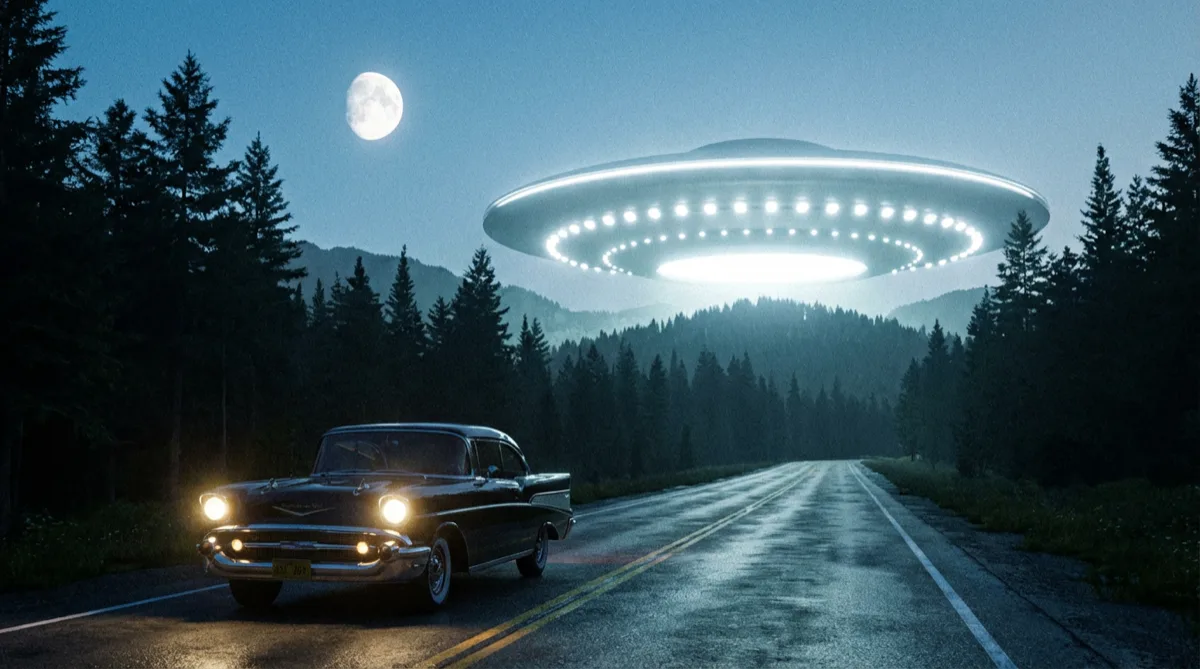
On the night of September 19, 1961, Betty and Barney Hill were driving south on U.S. Route 3 through New Hampshire’s White Mountains, heading home to Portsmouth after a short vacation in Montreal and Niagara Falls. The road was dark and mostly empty. A bright gibbous moon lit the sky.
Somewhere south of Colebrook, around 10 p.m., Betty noticed a bright light moving in the sky. It wasn’t a star. It wasn’t behaving like a plane. Over the next hour, as they continued south through Franconia Notch, the light appeared to follow them – growing larger, moving erratically, closing distance.
What happened next – and what the Hills would later claim happened during a two-hour gap in their memory – became the most influential UFO abduction case in American history.
Who Were the Hills?
Betty was a social worker. Barney worked for the U.S. Postal Service. They were an interracial couple – Betty was white, Barney was Black – living in Portsmouth, New Hampshire, at a time when that was still uncommon enough to draw attention. Both were active in the NAACP and local civic life. Barney had served in World War II and held roles in community organizations, including work connected to the U.S. Civil Rights Commission.
They were not, by any measure, people seeking attention. When the story eventually went public, it was against their wishes.
The Sighting
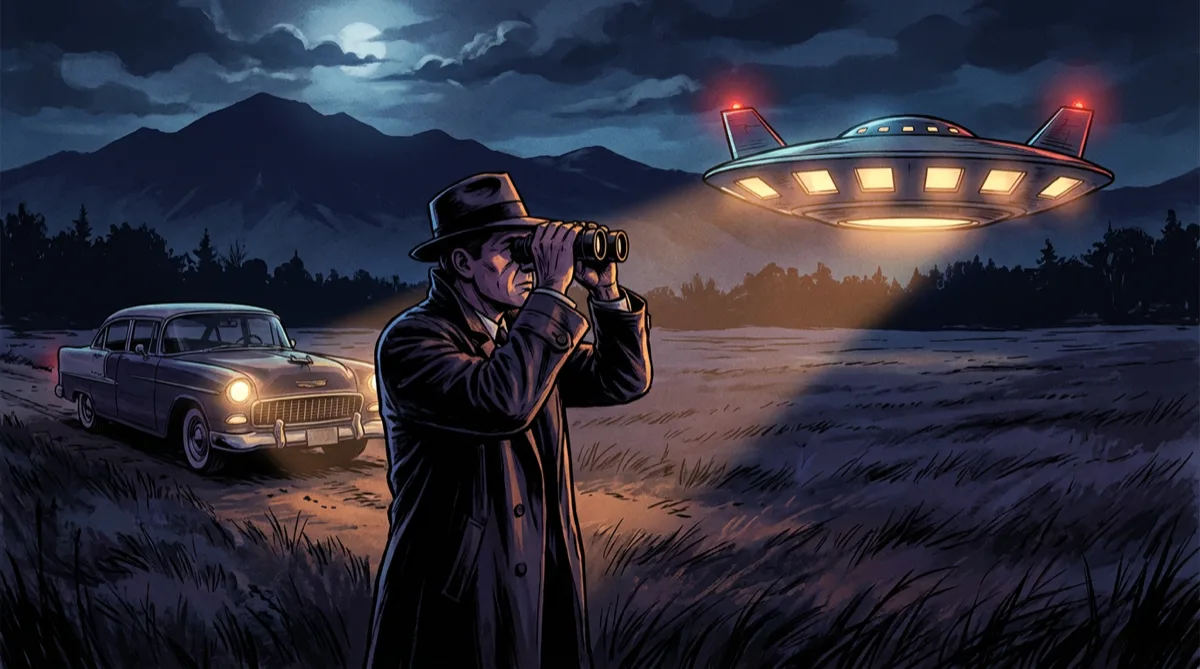
The Hills stopped multiple times to observe the object with binoculars. Near the Lincoln/Indian Head area, the craft appeared to descend toward the road. Barney got out of the car and walked toward it.
Through his binoculars, he later said, he could see a row of windows – and figures behind them.
“Do you believe in flying saucers now?”
“Don’t be ridiculous.”
That exchange, recalled in investigative materials, captures the tension between them in the moment. Barney panicked, ran back to the car, and they drove off.
Then came the beeping.
A series of buzzing, vibrating tones seemed to emanate from the trunk of their 1957 Chevrolet. Both described a wave of drowsiness – an altered state. When full awareness returned, they were miles farther south, near Ashland, with no memory of the intervening stretch of road.
They arrived home in Portsmouth around 5 a.m., roughly two hours later than their driving time should have required. Betty’s dress was torn and stained. Barney’s shoes were scuffed through. The binocular strap was broken. Circular, shiny spots on the car’s trunk made a compass needle jump.
The Report
Betty reported the sighting to Pease Air Force Base on September 21. Major Paul W. Henderson prepared Air Force Information Report No. 100-1-61, documenting the object description – lights, fin-like protrusions, erratic maneuvers – and the observation window between roughly midnight and 1 a.m.
Five days later, Betty wrote to the National Investigations Committee on Aerial Phenomena (NICAP). Investigator Walter N. Webb, an astronomer, drove to Portsmouth in October and interviewed the couple for six hours. He came away describing it as an
“honest, straightforward account of frightening experience.”
Project Blue Book, the Air Force’s UFO investigation program, eventually reviewed the case. On September 27, 1963, it issued a terse statement:
“The case is carried as insufficient data in the Air Force Files.”
The classification cited inconsistencies and a lack of key details, such as the object’s azimuth. No extraterrestrial explanation was endorsed. No conventional one was offered either.
The Nightmares and the Hypnosis
In the weeks after the sighting, Betty began having vivid, recurring nightmares – of being taken aboard a craft, separated from Barney, and subjected to medical procedures. She told Barney. She told friends. The dreams were detailed and disturbing.
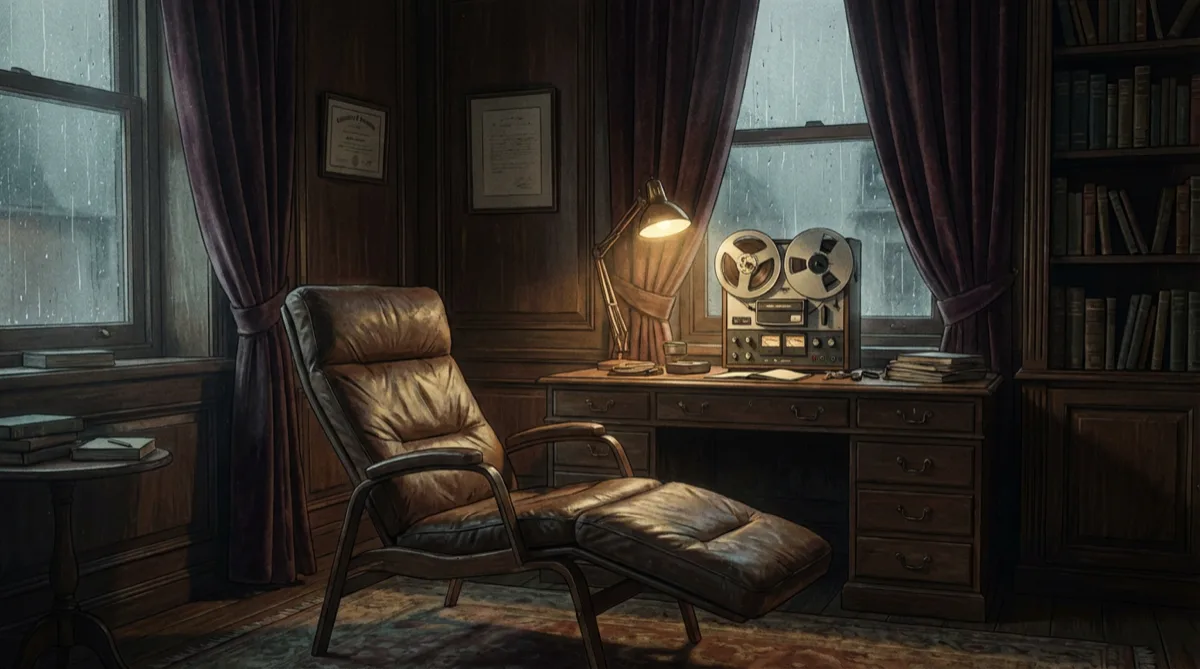
By late 1963, the couple sought help from Dr. Benjamin Simon, a Boston psychiatrist who specialized in hypnosis, particularly for wartime trauma cases. Beginning in January 1964, Simon conducted weekly hypnotic regression sessions over roughly seven months. Betty and Barney were hypnotized separately. Every session was recorded on tape.
Under hypnosis, both described being taken aboard a craft by humanoid beings and subjected to physical examinations. Betty’s account was more elaborate – she described needle probes, a painful “pregnancy test” involving her navel, and a conversation with a “leader” who showed her a star map and briefly allowed her to examine a book. Barney described intense eye contact with the beings, being placed on an examination table, and communication that felt nonverbal or telepathic.
The accounts overlapped in their broad strokes – the beeping episode, the altered state, the medical examination themes – but diverged on specifics like the beings’ appearance, the sequence of events, and how communication occurred.
Simon’s professional conclusion was measured. He accepted that the initial UFO sighting likely happened – something in the sky had genuinely frightened the Hills. But the abduction narrative, he believed, was something else:
“It happened only in Betty Hill’s dreams.”
Simon concluded that Betty’s nightmares had generated the abduction material, which was then shared with and absorbed by Barney through conversation. Hypnosis, in his view, had not recovered suppressed memories – it had elaborated on dreams and suggestion.
The Star Map
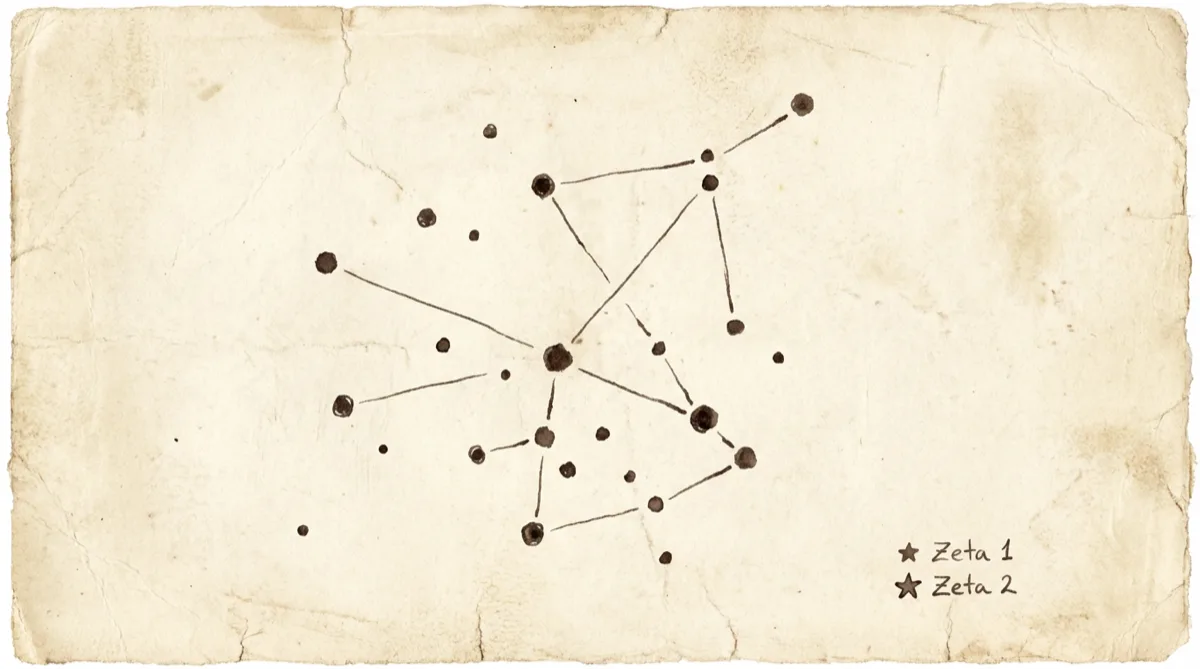
One of the most debated elements of the case emerged from Betty’s hypnosis sessions. She described being shown a three-dimensional star map by the craft’s “leader” and later drew it from memory – a pattern of dots connected by lines representing trade and exploration routes.
In the late 1960s, amateur astronomer Marjorie Fish took Betty’s sketch seriously. She built a physical three-dimensional model of nearby stars and spent years trying to match the pattern. In 1974, she presented her findings at a MUFON symposium: the map, she argued, matched the view from the Zeta Reticuli binary star system, roughly 39 light-years from Earth.
Later that year, Astronomy magazine published “The Zeta Reticuli Incident,” bringing the claim into a mainstream science publication and triggering a year of pro-and-con debate in its pages.
Skeptics argued that Fish’s methodology allowed too many degrees of freedom – with enough viewpoints and star catalogs, almost any pattern can find a match. When the European Space Agency’s Hipparcos satellite later refined stellar distance measurements, several of Fish’s specific identifications were called into question. Some accounts report that Fish herself eventually stepped back from the identification.
The star map remains one of the case’s most polarizing elements – compelling to those who see precision in Betty’s drawing, unconvincing to those who see pattern-matching in a noisy dataset.
How It Became Public
The Hills did not seek publicity. For years, the case circulated only among NICAP investigators, the Air Force filing system, and Dr. Simon’s confidential tapes. That changed on October 25, 1965, when reporter John H. Luttrell of the Boston Traveler published a front-page story – “A UFO Chiller: Did THEY Seize Couple?” – based on leaked information. United Press International picked it up the next day, and the story went national.
In 1966, journalist John G. Fuller published The Interrupted Journey, drawing on Simon’s session recordings and extensive interviews with the Hills. That same year, LOOK magazine ran an illustrated excerpt. The case was now mass culture.
A decade later, NBC adapted the story into The UFO Incident (1975), starring James Earl Jones as Barney and Estelle Parsons as Betty – lending Hollywood weight to an account that had already reshaped how Americans imagined alien contact.
The Template
The Hill case didn’t just make headlines. It established the vocabulary and structure that nearly every subsequent abduction claim would follow:
- Missing time – an unexplained gap in memory during or after a sighting
- Medical examination – invasive procedures performed by nonhuman beings
- Humanoid occupants – beings with large eyes, smooth skin, and telepathic communication
- Hypnotic regression – the method used to “recover” suppressed memories
Before the Hills, UFO reports were about lights in the sky and strange craft. After the Hills, they were about contact – and the abduction narrative became a genre unto itself.
The Hills After
Barney Hill died on February 25, 1969, at age 46, from a cerebral hemorrhage. He was never fully comfortable with the public attention.
Betty lived until October 17, 2004, dying in Portsmouth at age 85. She remained engaged with the UFO community for decades, though she announced a partial retirement from public appearances in 1991.
In July 2011, on the 50th anniversary of the incident, the New Hampshire Division of Historical Resources erected a roadside historical marker near Lincoln – an official acknowledgment, if not an endorsement, of the event’s place in the state’s history.
Their papers – letters, investigative reports, session transcripts, and personal correspondence – are archived at the University of New Hampshire Library, available to researchers.
Timeline
| Date | Event |
|---|---|
| Sep 19, 1961 | Hills observe a bright, maneuvering light while driving through the White Mountains |
| Sep 20, 1961 | Beeping episode, missing time, late arrival home with physical anomalies |
| Sep 21, 1961 | Betty reports sighting to Pease Air Force Base |
| Oct 21, 1961 | NICAP investigator Walter Webb interviews the couple for six hours |
| Sep 27, 1963 | Project Blue Book classifies the case as “insufficient data” |
| Jan–Jun 1964 | Dr. Benjamin Simon conducts hypnotic regression sessions |
| Oct 25, 1965 | Boston Traveler breaks the story publicly |
| 1966 | John G. Fuller publishes The Interrupted Journey |
| Dec 1974 | Astronomy magazine publishes “The Zeta Reticuli Incident” |
| Feb 25, 1969 | Barney Hill dies, age 46 |
| Oct 17, 2004 | Betty Hill dies, age 85 |
| Jul 2011 | New Hampshire historical marker erected near Lincoln |
Sources: CUFOS – Webb/NICAP Investigative Report · University of New Hampshire – Hill Papers · Yale University Press – Bowman (2023) · Boston Public Library · Los Angeles Times – Betty Hill Obituary · NH Public Radio – Historical Marker · U.S. National Archives – Blue Book Records · Skeptical Inquirer – Kottmeyer (1994) · Harvard University Press – Clancy · Astronomy Magazine – Dec 1974 · Armagh Observatory – Zeta Reticuli